
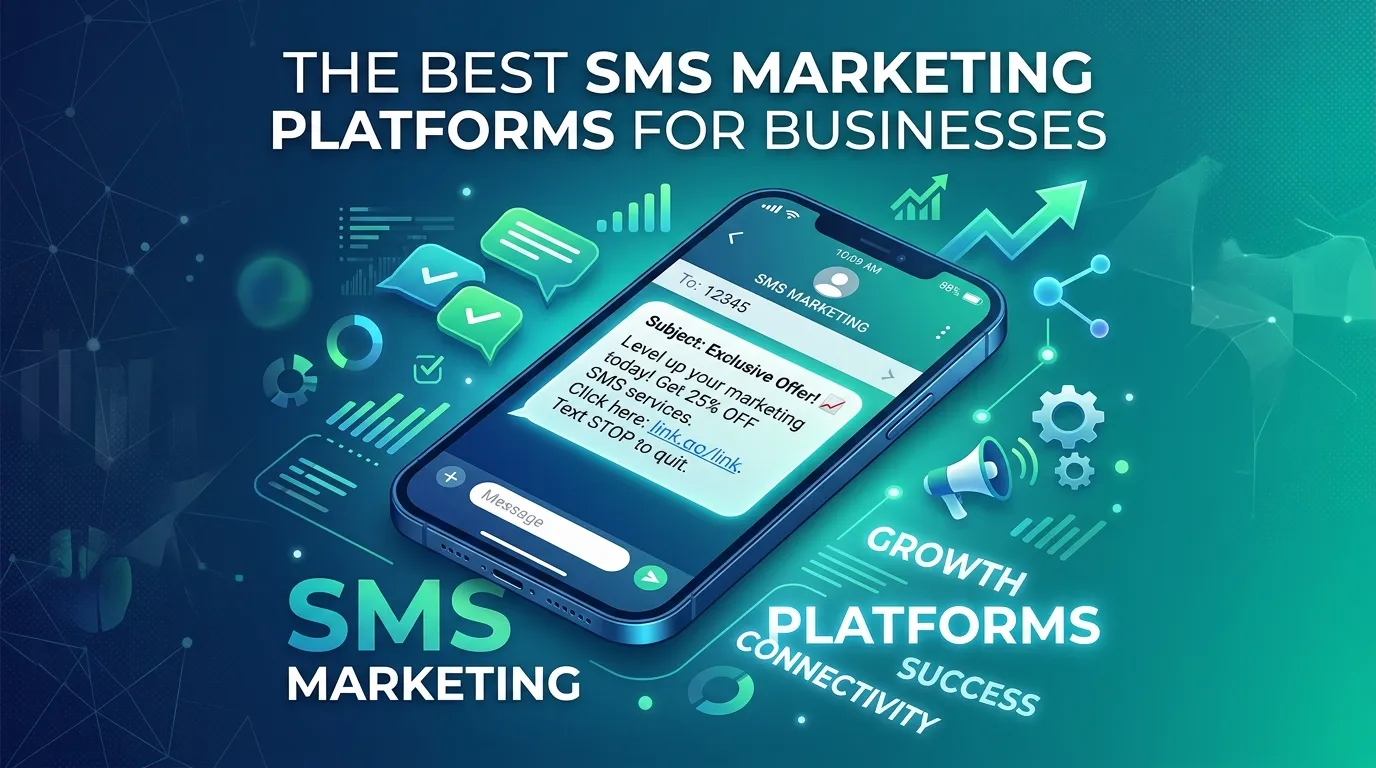
An SMS marketing platform is a powerful tool that helps businesses send bulk messages, automate campaigns, and manage customer conversations in real time. The best platforms offer cloud-based infrastructure, audience segmentation, automation features, and affordable pricing. Choosing the right SMS marketing platform improves engagement, boosts conversions, and makes mobile marketing more efficient and scalable.
SMS marketing platforms help businesses send bulk messages, automate campaigns, and manage two-way customer conversations from one dashboard. The best tools combine cloud-based infrastructure, campaign management, and affordability—making SMS one of the highest-ROI mobile marketing channels available today.
SMS has a 98% open rate. Email marketers would kill for those numbers. Yet countless businesses still treat text messaging as an afterthought, cobbling together manual sends or relying on outdated broadcast tools that weren’t built for modern marketing.
The right SMS marketing platform changes everything. It lets you automate workflows, segment your audience, launch promotional campaigns, and hold real conversations with customers—all without switching between a dozen different tools. Whether you’re running a lean startup or scaling a growing enterprise, there’s a solution built for your needs and budget.
This guide breaks down everything you need to know about SMS marketing software: what to look for, which features matter most, and how to choose the right platform for your business. By the end, you’ll have a clear framework for evaluating your options—and a shortlist of the capabilities that separate good platforms from great ones.
What Is an SMS Marketing Platform and Why Does It Matter?
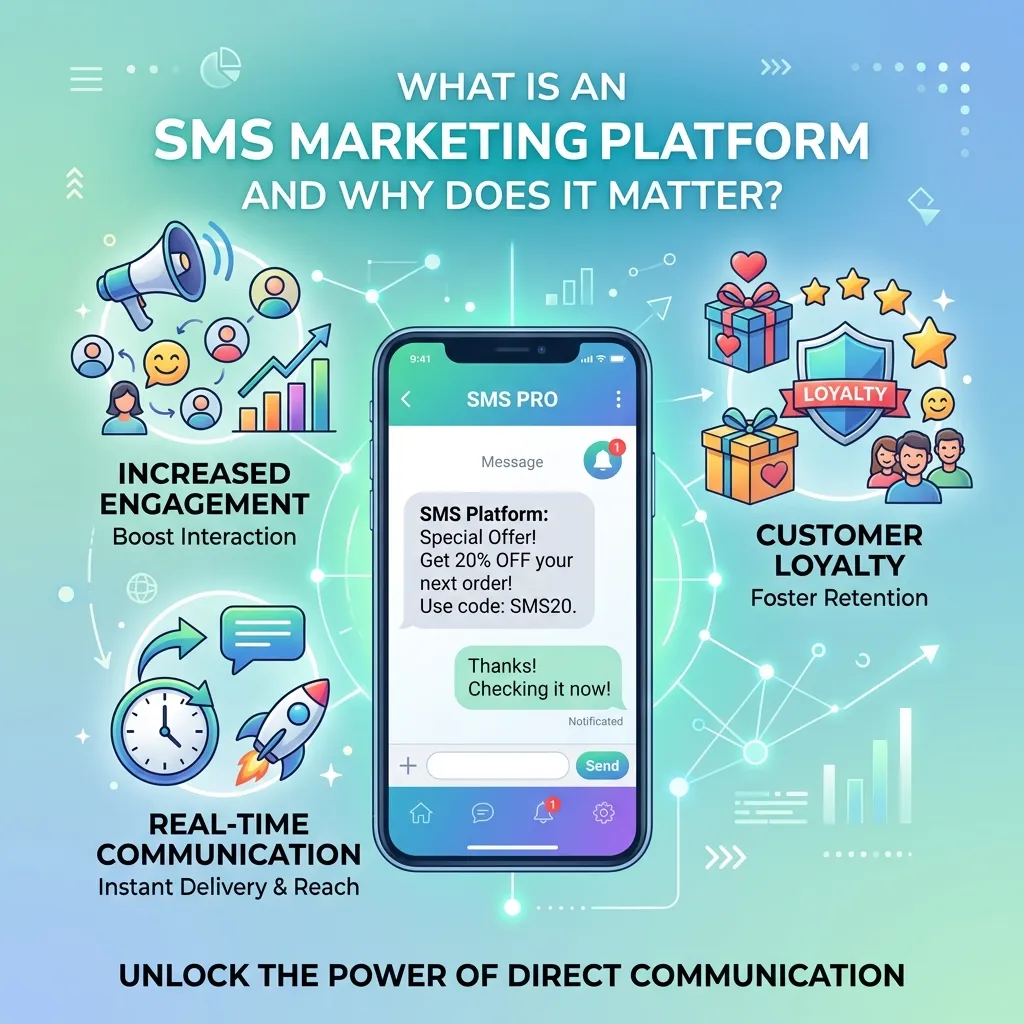
An SMS marketing platform is a cloud-based software solution that enables businesses to send, receive, and manage text message campaigns at scale. Unlike basic texting apps, these platforms are built for commercial use—offering bulk SMS delivery, automation workflows, contact segmentation, analytics dashboards, and compliance tools in a single interface.
The stakes are high. SMS boasts response rates as high as 45%, compared to email’s average of around 6% (Gartner). Consumers read text messages within three minutes of receiving them. For time-sensitive promotions, appointment reminders, or customer service follow-ups, no other channel comes close.
But sending bulk SMS without the right infrastructure can backfire fast. Deliverability issues, opt-out mismanagement, and compliance failures (particularly around TCPA and GDPR) can damage your brand and expose your business to legal risk. A proper SMS marketing platform handles all of this behind the scenes.
What to Look for in Bulk SMS Marketing Software
Not all platforms are created equal. When evaluating bulk SMS marketing software, these are the capabilities that matter most:
Scalable message delivery
The platform should handle high message volumes without degrading delivery speed or reliability. Look for platforms built on carrier-grade infrastructure with direct connections to major telecom networks.
Cloud-based SMS marketing system
Cloud-based platforms eliminate the need for on-premise hardware and allow your team to manage campaigns from anywhere. They also scale easily as your contact list grows—a critical consideration for businesses in growth mode.
Contact segmentation and list management
Bulk sending is only valuable when it’s targeted. Strong segmentation tools let you group contacts by behavior, purchase history, location, or custom attributes, ensuring the right message reaches the right person.
Compliance and opt-out management
Automated opt-out handling, double opt-in support, and built-in compliance features aren’t optional—they’re essential. A platform that doesn’t manage these rigorously puts your business at risk.
Reporting and analytics
Open rates, click-through rates, delivery rates, and conversion tracking should all be visible in a centralized dashboard. These metrics are what separate SMS marketing from SMS guessing.
SMS Automation Platform for Business: Why Automation Changes the Game
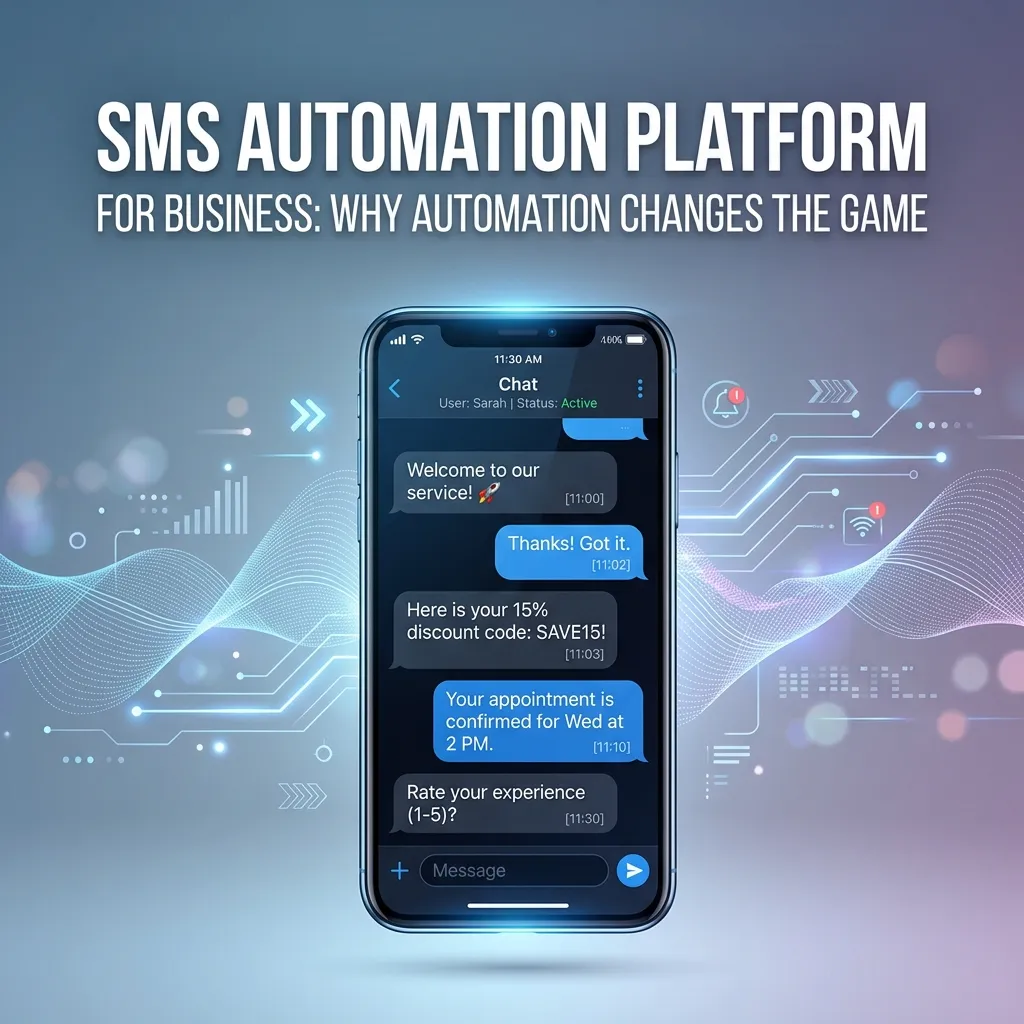
Manual SMS campaigns have a ceiling. You can only send so many messages at once, and you certainly can’t respond to every customer individually at scale. That’s where SMS automation comes in.
A purpose-built SMS automation platform for business enables you to build workflows that trigger messages based on specific customer actions or time delays. Common automation use cases include:
- Welcome sequences triggered when a new customer opts in
- Abandoned cart reminders sent hours after a shopper leaves your site
- Post-purchase follow-ups requesting reviews or offering repeat-purchase incentives
- Appointment reminders with confirmation and rescheduling options
- Loyalty program updates based on point milestones or reward availability
The compounding effect of automation is significant. Instead of investing hours building individual campaigns, your team sets workflows once and lets them run. The platform handles the timing, personalization, and delivery you focus on strategy.
Platforms like Klaviyo, Attentive, and Postscript have built strong reputations specifically for e-commerce SMS automation. For broader business use cases, tools like Twilio, SimpleTexting, and EZTexting offer flexible automation builders suited to industries from healthcare to hospitality.
Two-Way SMS Marketing: The Feature Most Businesses Underuse
Most businesses think of SMS as a broadcast channel one direction, one purpose. The forward-thinking ones are treating it as a conversation tool.
A two-way SMS marketing platform allows customers to reply to your messages and receive real, contextual responses. This can mean live agent replies routed through a shared inbox, or automated responses triggered by specific keywords (e.g., reply “MENU” to see today’s specials, reply “HELP” to reach support).
Two-way SMS dramatically improves customer experience metrics. It reduces friction in the buying journey, speeds up issue resolution, and creates a sense of accessibility that email simply can’t replicate. According to Salesforce, 68% of customers say they prefer brands that make it easy to message them directly.
When evaluating a two-way SMS marketing platform, look for:
- A shared team inbox for collaborative message management
- Keyword-based auto-replies for common queries
- CRM integration to log conversation history
- Mobile access so agents can respond on the go
SMS Broadcast Platform for Promotions: Getting the Most Out of Mass Messaging
Promotional SMS campaigns—flash sales, limited-time offers, event announcements—represent one of the highest-ROI use cases for any SMS broadcast platform. The immediacy of text messaging makes it ideal for time-sensitive offers that can’t wait for someone to check their email.
To maximize results from broadcast campaigns:
Time your sends strategically. Research consistently shows that messages sent mid-morning (10–11 AM) or early evening (6–7 PM) on weekdays generate the strongest engagement. Avoid early mornings and late nights.
Keep copy tight. SMS messages have a 160-character limit for standard SMS, and even with MMS, brevity wins. Lead with the offer, include a clear CTA, and link to a mobile-optimized landing page.
Personalize where possible. Even simple personalization—using the recipient’s first name or referencing a past purchase—can lift conversion rates meaningfully. Most SMS campaign management software platforms support dynamic field insertion.
Test before you broadcast. Send test messages to your own device across multiple carriers before deploying to your full list. What looks perfect in the dashboard doesn’t always render identically across networks.
Affordable SMS Marketing Service: What You Should Expect to Pay
Pricing structures vary significantly across platforms, and “affordable” means different things depending on your send volume and feature needs.
Most SMS marketing software pricing follows one of three models:
- Pay-per-message: You purchase message credits in bulk, ideal for low-volume or highly variable sending patterns.
- Monthly subscription tiers: Fixed pricing based on message volume, contact list size, or features. Common among platforms targeting small and mid-sized businesses.
- Custom enterprise pricing: Negotiated rates for high-volume senders, typically including dedicated support and SLA guarantees.
For SMS marketing software for small businesses, platforms like SimpleTexting, SlickText, and TextMagic offer entry-level plans starting between $25–$50 per month, with meaningful feature sets that don’t require a developer to configure.
Mid-market businesses sending 50,000–500,000 messages per month should expect to invest $200–$1,000+ monthly, depending on the platform and features required.
One hidden cost to watch: inbound messages. Some platforms charge per reply received, which can add up quickly on two-way campaigns. Always confirm the full pricing structure before committing.
Choosing the Best SMS Marketing Tools: A Decision Framework
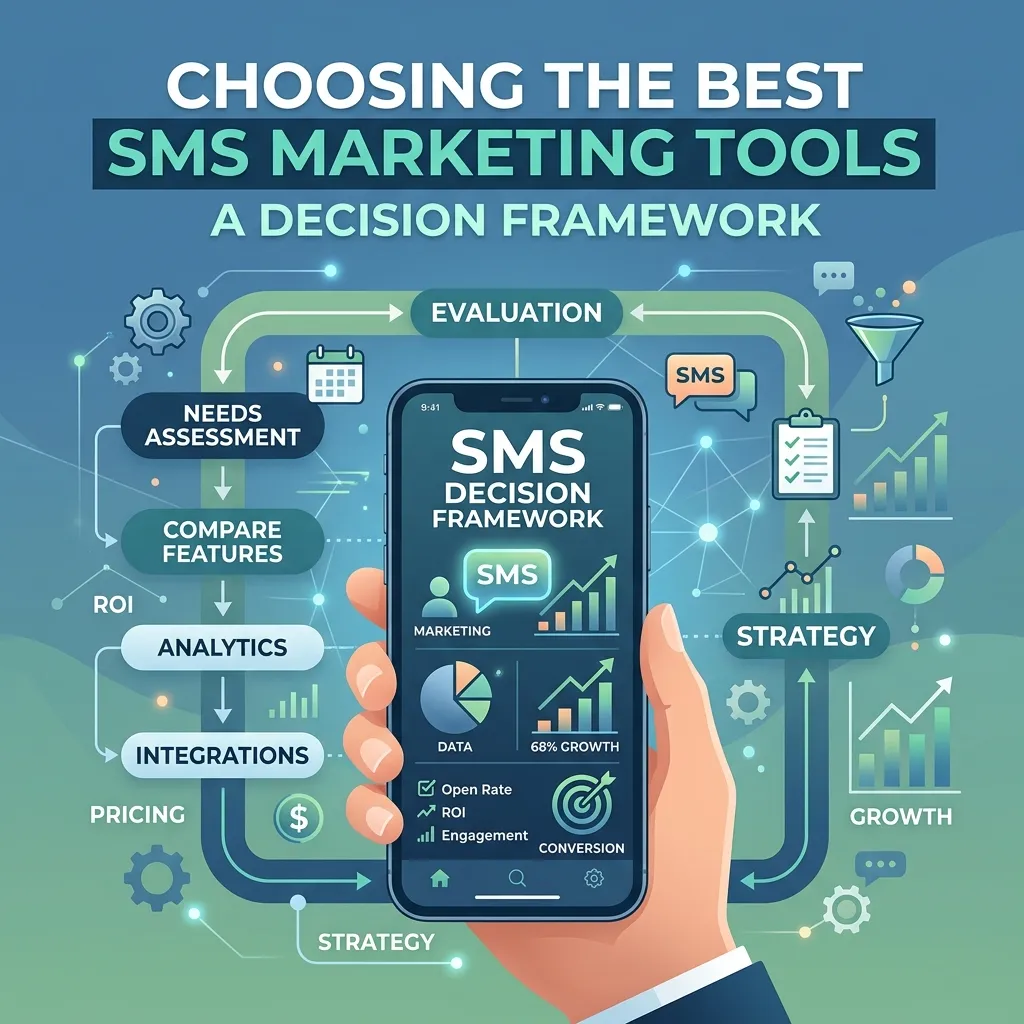
With dozens of platforms on the market, narrowing your options comes down to a few critical questions:
What’s your primary use case? E-commerce brands driving repeat purchases should prioritize deep integration with Shopify or WooCommerce and robust automation. Service businesses focused on appointment management need simple scheduling workflows and two-way communication.
What’s your send volume? Low-volume senders (under 5,000 messages/month) can thrive on affordable entry-level tools. High-volume senders need carrier-grade infrastructure and dedicated IP options.
How technical is your team? Some platforms are no-code and built for marketers. Others, like Twilio, offer incredible flexibility but require developer resources to configure.
What integrations do you need?
The best SMS marketing tools connect seamlessly with your existing CRM, e-commerce platform, and marketing automation stack. Fragmented data leads to fragmented customer experiences.
What’s your compliance exposure? If you operate in regulated industries or across multiple countries, prioritize platforms with built-in compliance management, detailed audit logs, and GDPR/TCPA support.
The Real Competitive Advantage of a Mobile SMS Marketing Solution
Here’s what often gets lost in feature comparisons: the best mobile SMS marketing solution isn’t the one with the most capabilities—it’s the one your team will actually use consistently and well.
A powerful platform with a clunky interface leads to underutilization. A simple platform missing key integrations leads to workarounds that waste time. The right fit sits at the intersection of capability, usability, and scalability.
Start with a clear picture of your current gaps—where are customers falling through the cracks? Where are campaigns failing to convert? An SMS platform should directly solve those problems, not add new complexity.
Take Your SMS Marketing to the Next Level
SMS marketing is no longer a supplementary channel. For businesses serious about customer engagement and retention, it’s a core part of the mobile marketing stack. The data is clear, the technology is mature, and the barriers to entry have never been lower.
Evaluate platforms against the criteria outlined here, shortlist two or three that fit your use case and budget, and run a controlled pilot before committing. Most platforms offer free trials—use them. The right SMS marketing platform will prove its ROI quickly.
Frequently Asked Questions
What is the best SMS marketing platform for small businesses?
For small businesses, platforms like SimpleTexting, SlickText, and EZTexting offer the best combination of ease of use, affordability, and core features. These tools typically start under $50/month and don’t require technical expertise to set up.
How does SMS automation work for marketing campaigns?
SMS automation uses trigger-based workflows to send messages automatically when a customer takes a specific action—such as signing up, making a purchase, or abandoning a cart. You configure the rules once, and the platform handles delivery, timing, and personalization.
Is SMS marketing compliant with privacy laws?
Yes, provided you follow applicable regulations. In the US, the TCPA requires express written consent before sending marketing messages. In the EU and UK, GDPR applies. Reputable SMS marketing platforms include built-in opt-in/opt-out management tools to help businesses maintain compliance.
What’s the difference between one-way and two-way SMS marketing?
One-way SMS is purely broadcast—you send messages and customers cannot reply meaningfully. Two-way SMS enables real dialogue: customers can respond, ask questions, or take action via reply, and your team (or an automated workflow) responds in return. Two-way platforms generally deliver higher engagement rates.
How much does SMS marketing software cost?
Pricing ranges from $25/month for small business plans to several thousand dollars monthly for enterprise solutions. Most platforms charge based on message volume, contact list size, or a combination of both. Always verify whether inbound messages are included in the pricing.
