

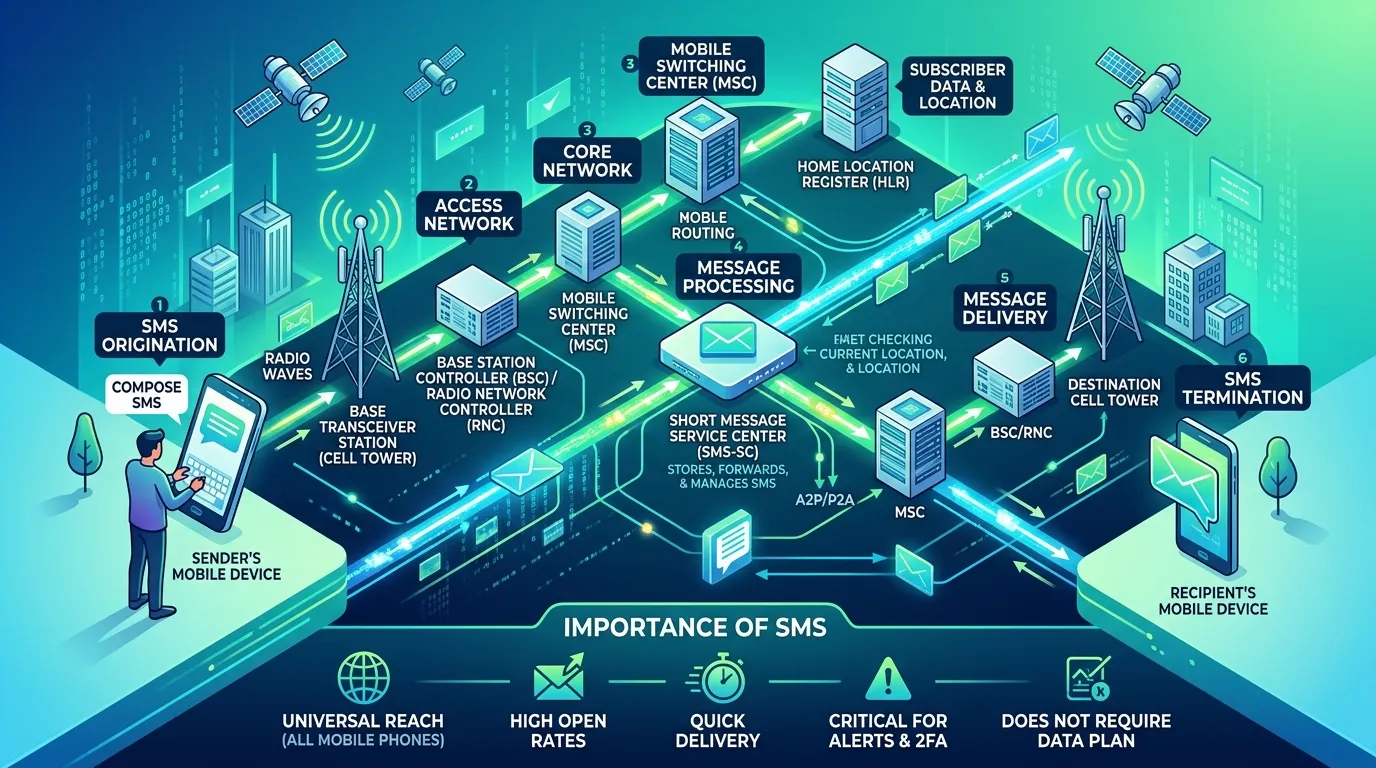
An SMS messaging network is the backbone of modern business communication, enabling secure and reliable text message delivery through SMS gateways, APIs, and mobile carrier networks. This guide explains how SMS messaging networks work, the benefits of bulk and two-way messaging, key features to look for in an SMS platform, and how businesses can improve customer engagement with scalable, compliant SMS solutions.
An SMS messaging network is the infrastructure that routes text messages from sender to recipient across mobile carriers worldwide. Businesses rely on SMS gateway networks, bulk SMS platforms, and SMS API integrations to deliver time-sensitive communications at scale—with open rates that consistently outperform email.
Text messaging has been around since 1992, yet it remains one of the most powerful communication channels available to businesses today. Not because it’s nostalgic, but because it works. According to research from SimpleTexting, SMS messages have an average open rate of 98%—compared to just 20% for email. That number alone explains why enterprises, startups, and everything in between are investing heavily in business SMS messaging.
But behind every text you receive from a bank, a pharmacy, or a delivery service is a sophisticated piece of infrastructure: the SMS messaging network. Understanding how this network operates—and how to leverage it effectively—can make the difference between a communication strategy that converts and one that gets ignored.
This post breaks down how SMS messaging networks are built, how businesses access them, and what to look for when choosing an SMS communication platform for your organization.
What Is an SMS Messaging Network?
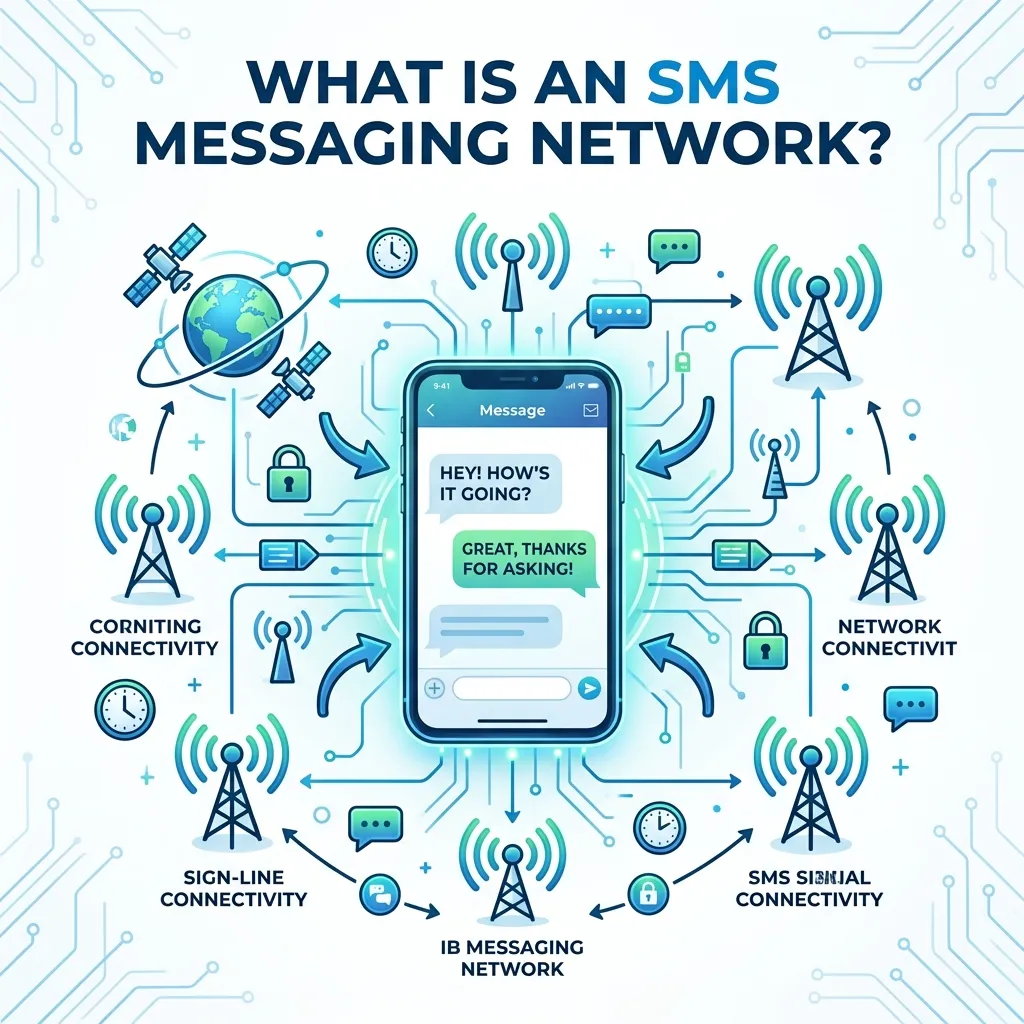
An SMS messaging network is the interconnected system of mobile carriers, SMS gateways, and routing infrastructure that enables text messages to travel from one device to another. When a business sends a text to a customer, that message doesn’t travel directly. Instead, it passes through multiple nodes—an SMS gateway, a carrier network, and sometimes international routing hubs—before landing on the recipient’s phone.
At its core, the network relies on a protocol called Short Message Service (SMS), standardized by the GSM Association in the late 1980s. Each message is limited to 160 characters per segment, though modern platforms stitch multiple segments together seamlessly for longer messages.
There are two primary types of SMS traffic businesses work with:
- A2P (Application-to-Person): Messages sent from a software platform or application to an individual. This includes appointment reminders, OTPs, marketing campaigns, and shipping updates.
- P2P (Person-to-Person): Standard messages exchanged between two individuals via their mobile devices.
Enterprise SMS solutions almost exclusively operate in the A2P space.
How Does an SMS Gateway Network Route Messages?
An SMS gateway acts as the bridge between the internet (or a business’s software system) and the mobile carrier network. When a business sends a bulk SMS or individual alert through an SMS communication platform, here’s what happens:
- The message enters the SMS gateway. The business’s software connects to the gateway via an SMS API integration, passing along the message content, sender ID, and recipient number.
- The gateway routes the message. Based on the recipient’s country and carrier, the gateway selects the most efficient route. This might involve direct carrier connections, aggregator networks, or regional hubs.
- The carrier delivers the message. Once the message reaches the recipient’s carrier, it’s queued and pushed to the device—typically within seconds.
- Delivery status is returned. Most modern SMS delivery services send a delivery receipt back to the sender’s platform, confirming whether the message was successfully delivered.
This entire process usually takes less than 10 seconds. For time-critical communications like two-factor authentication or fraud alerts, speed and reliability of the SMS gateway network are non-negotiable.
What Makes a Global SMS Network Different from a Local One?
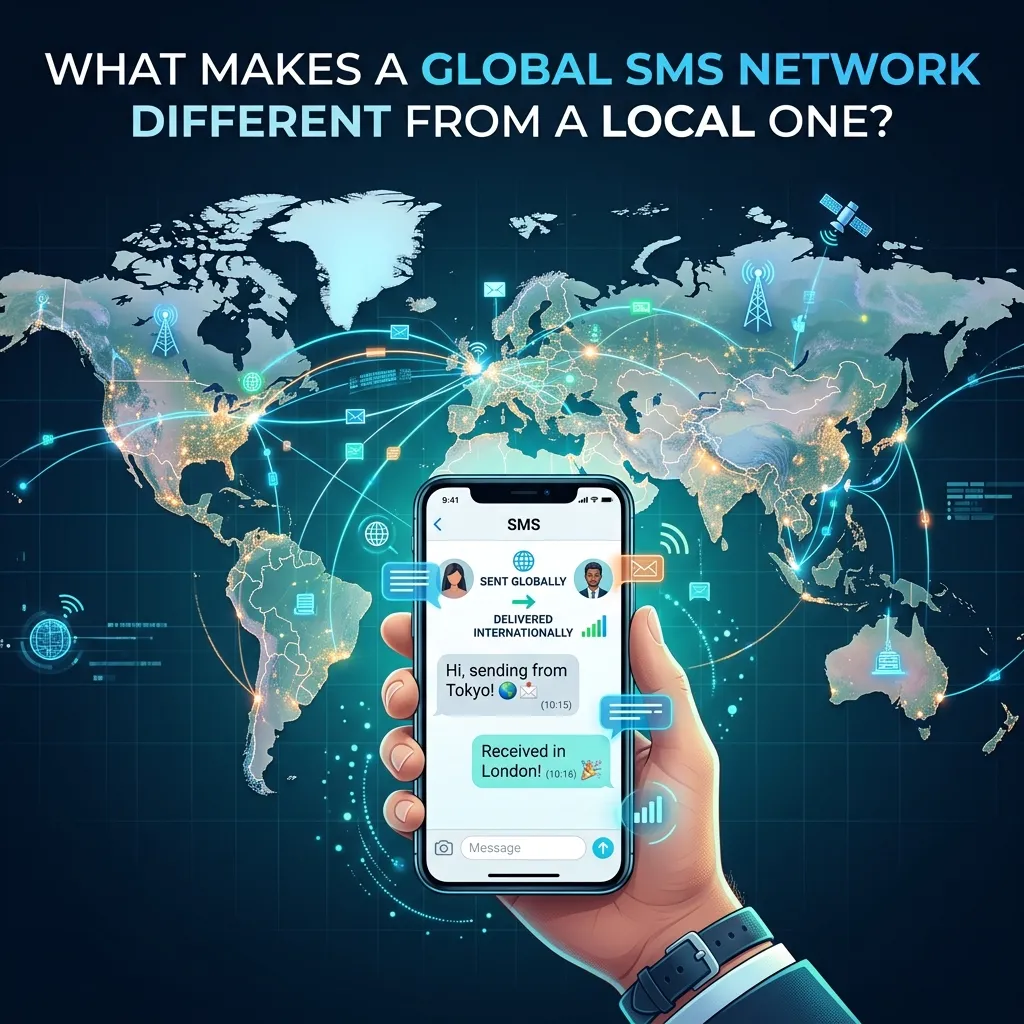
A local SMS network operates within the boundaries of a single country, connecting businesses to domestic carriers. A global SMS network extends this reach across borders, enabling businesses to send messages to recipients in hundreds of countries.
Global reach comes with added complexity. Different countries have different carrier relationships, regulatory environments, and message format requirements. A message sent to a US number follows different routing rules than one sent to a number in Germany or Brazil. Enterprise SMS solutions designed for international use maintain direct connections with carriers in each region—called direct routes—rather than relying on third-party aggregators, which can introduce delays or delivery failures.
Key factors that distinguish high-quality global SMS networks include:
- Direct carrier connections in key markets to reduce latency and improve deliverability
- Redundant routing paths so messages reroute automatically if one path fails
- Compliance infrastructure to handle country-specific regulations (such as GDPR in Europe or TCPA in the US)
- Local sender ID support to ensure messages display correctly in each country
For businesses operating across multiple markets, choosing an SMS communication platform with a robust global SMS network is a strategic necessity, not a nice-to-have.
How Do Businesses Access SMS Networks? Understanding SMS API Integration
Most businesses don’t build their own SMS gateway—they access existing networks through an SMS API integration. An API (Application Programming Interface) allows a business’s software to communicate directly with an SMS platform, triggering messages based on real-time events.
Common use cases for SMS API integration include:
- E-commerce platforms triggering order confirmation and shipping update texts automatically
- Healthcare providers sending appointment reminders to reduce no-shows
- Financial institutions delivering one-time passwords (OTPs) for secure logins
- Logistics companies providing real-time delivery windows and driver tracking links
A well-documented SMS API makes integration straightforward, typically requiring just a few lines of code. Most platforms support RESTful APIs, webhooks for delivery receipts, and sandbox environments for testing before going live.
When evaluating an SMS API integration, businesses should look for:
- Comprehensive documentation and developer support
- Low-latency message delivery (under 5 seconds for critical alerts)
- High throughput capacity for bulk SMS network campaigns
- Detailed delivery reporting and analytics
What Is Two-Way SMS Messaging and Why Does It Matter?
Traditional business SMS was one-directional—companies sent messages, customers received them. Two-way SMS messaging changes that dynamic entirely, enabling real conversations between businesses and their customers through a standard text interface.
Two-way SMS messaging is particularly valuable for:
- Customer support: Customers can reply to a support message and receive a response without downloading an app or waiting on hold.
- Appointment management: Automated systems can send appointment reminders and allow customers to confirm, reschedule, or cancel by replying with a keyword.
- Lead qualification: Marketing teams can engage inbound leads through conversational SMS flows before handing them off to sales.
- Surveys and feedback: Short, text-based surveys collect higher response rates than web-based alternatives.
According to Zipwhip, 74% of consumers say they would be more likely to respond to a text from a business if they could reply directly. That statistic highlights a fundamental shift: customers don’t just want to receive information—they want to engage.
Bulk SMS Networks: Sending at Scale Without Sacrificing Deliverability
Bulk SMS messaging refers to the practice of sending large volumes of text messages to a defined audience simultaneously. A retailer announcing a flash sale, a government agency issuing a public alert, or a SaaS company notifying users of a service outage—all of these involve bulk SMS network infrastructure.
Sending at scale introduces challenges that don’t exist when messaging a handful of recipients. Carrier networks have throughput limits, and flooding a single route with thousands of messages per second can trigger spam filters or cause delays. Quality bulk SMS platforms address this through:
- Message throttling: Controlling send speed to comply with carrier rate limits
- Number pooling: Distributing messages across multiple sender numbers to avoid triggering spam detection
- Carrier pre-approval: Registering campaigns with carriers in advance (a requirement in markets like the US since the A2P 10DLC rollout)
- Opt-out management: Automatically processing STOP replies and removing opted-out numbers from future campaigns
Deliverability is the single most important metric in bulk SMS—a message that doesn’t reach its recipient has no value, regardless of how compelling the content is.
How to Choose the Right SMS Communication Platform for Your Business
Not all SMS delivery services are created equal. The right choice depends on your use case, volume, geographic footprint, and technical requirements. Here’s a framework for evaluating your options:
Choose a platform with direct carrier connections if: Message speed and deliverability are critical—such as for OTPs, fraud alerts, or emergency notifications.
Prioritize global SMS network coverage if: Your customer base spans multiple countries and you need consistent delivery across regions.
Focus on SMS API integration quality if: You plan to embed SMS into an existing product, CRM, or marketing automation stack.
Evaluate two-way SMS capabilities if: Your use case involves customer responses, conversational flows, or support interactions.
Assess compliance support if: You operate in regulated industries or markets with strict messaging laws (healthcare, finance, or the EU).
Beyond these functional criteria, consider the platform’s support model, uptime SLAs, and pricing transparency. SMS costs vary significantly based on destination country, route quality, and volume commitments.
The Regulatory Landscape for Business SMS Messaging
Compliance is one of the most overlooked aspects of enterprise SMS solutions. Different countries have different rules governing who can be messaged, what must be included in messages, and how consent is obtained and documented.
In the United States, the Telephone Consumer Protection Act (TCPA) requires explicit written consent before sending marketing messages. The A2P 10DLC registration system, introduced by carriers in 2021, requires businesses to register their brand and campaigns before sending messages via 10-digit long codes.
In Europe, GDPR applies to SMS marketing in the same way it applies to email—consent must be freely given, specific, informed, and unambiguous.
In Australia, the Spam Act 2003 requires that all commercial messages include a clear opt-out mechanism.
Penalties for non-compliance can be severe. TCPA violations in the US can result in fines of $500 to $1,500 per message. Building compliance into your SMS strategy from day one—not as an afterthought—protects your business and your customers.
The Future of SMS: Why the Network Keeps Growing
Despite the rise of messaging apps like WhatsApp, iMessage, and Telegram, SMS continues to grow as a business communication channel. The reason is straightforward: SMS requires no app download, no internet connection, and works on every mobile device manufactured in the last three decades.
The global A2P SMS market was valued at $68.15 billion in 2022 and is projected to grow at a compound annual growth rate (CAGR) of 3.8% through 2030, according to Grand View Research. Emerging capabilities like RCS (Rich Communication Services)—often described as “SMS 2.0″—will extend the channel further, adding support for images, interactive buttons, and branded sender experiences.
For businesses, that trajectory means one thing: investing in a reliable SMS messaging network now positions you ahead of the curve, not behind it.
Build Your SMS Strategy on the Right Foundation
The SMS messaging network is more than a delivery mechanism—it’s a strategic asset. Whether you’re sending transactional alerts through an SMS API integration, running bulk SMS campaigns, or enabling two-way SMS conversations with customers, the quality of your underlying infrastructure directly determines your results.
Start by auditing your current SMS delivery service. Assess deliverability rates by country, evaluate your carrier connections, and confirm your compliance posture in every market you operate in. If your platform can’t provide transparent reporting on these metrics, it’s worth exploring alternatives.
The businesses that treat SMS as a channel worth optimizing—not just activating—are the ones consistently seeing stronger engagement, higher conversion rates, and more loyal customers.
Frequently Asked Questions
What is an SMS gateway network?
An SMS gateway network is the infrastructure that connects business messaging platforms to mobile carrier networks. It routes messages from a sender’s application to the recipient’s phone, handling delivery confirmation, compliance filtering, and carrier-specific routing along the way.
How does SMS API integration work for businesses?
An SMS API integration allows a business’s software to connect directly to an SMS platform and trigger messages automatically. For example, an e-commerce store can use an SMS API to send order confirmation texts the moment a purchase is completed, without any manual intervention.
What is the difference between A2P and P2P SMS?
A2P (Application-to-Person) SMS is sent from a software platform to an individual—used for marketing, alerts, and OTPs. P2P (Person-to-Person) SMS is a standard text exchange between two individuals. Business SMS messaging operates in the A2P space.
What should I look for in a bulk SMS network provider?
Look for direct carrier connections, high deliverability rates, compliance infrastructure, number pooling capabilities, and detailed delivery analytics. The ability to scale throughput without triggering carrier spam filters is also critical for high-volume campaigns.
Is two-way SMS messaging difficult to implement?
Two-way SMS messaging is relatively straightforward to implement through most modern SMS communication platforms. It typically requires configuring a long code or short code to receive inbound messages and setting up a webhook or API endpoint to process replies in your system.
How do businesses stay compliant with SMS regulations?
Compliance starts with obtaining proper consent before messaging anyone. In the US, this means TCPA-compliant opt-in language and A2P 10DLC registration. In Europe, GDPR consent standards apply. Most enterprise SMS solutions include built-in opt-out management and compliance tools to simplify this process.
What is an SMS messaging network?
An SMS messaging network is the infrastructure that routes text messages between businesses, mobile carriers, and recipients. It enables reliable delivery of transactional, marketing, and customer service messages worldwide.
How does an SMS gateway network work?
An SMS gateway network acts as a bridge between a business application and mobile carriers. It receives messages through an SMS API, selects the best delivery route, and forwards them to the recipient’s mobile network.
What is the difference between an SMS messaging network and an SMS gateway?
An SMS messaging network is the complete ecosystem of gateways, carriers, and routing systems, while an SMS gateway is a single component that connects business applications to that network.
Why do businesses use SMS API integration?
SMS API integration allows businesses to automatically send text messages from websites, apps, or CRM systems. It’s commonly used for OTP verification, appointment reminders, order updates, and marketing campaigns.
What is A2P SMS messaging?
A2P (Application-to-Person) SMS refers to messages sent from software applications to customers. Businesses use A2P messaging for notifications, authentication codes, promotional offers, and customer engagement.
What should I look for in an SMS communication platform?
Choose an SMS communication platform that offers direct carrier connections, high delivery rates, global coverage, SMS API support, two-way messaging, detailed analytics, and compliance features to ensure reliable business communication.
What is a bulk SMS network?
A bulk SMS network enables businesses to send thousands or even millions of text messages simultaneously. It’s commonly used for marketing campaigns, emergency alerts, promotional offers, and customer notifications while maintaining high deliverability.
Can an SMS messaging network support international messaging?
Yes. A global SMS messaging network allows businesses to send text messages across multiple countries through direct carrier partnerships, ensuring faster delivery, improved reliability, and compliance with local regulations.
Is two-way SMS messaging important for businesses?
Two-way SMS messaging enables customers to reply directly to business messages. This improves customer support, appointment scheduling, lead qualification, surveys, and overall engagement through real-time conversations.
How can I choose the best SMS messaging network provider?
When selecting an SMS messaging network provider, compare delivery speed, global carrier coverage, API capabilities, pricing, scalability, uptime, security, reporting tools, and regulatory compliance to ensure it meets your business needs.
