

SMS marketing analytics helps businesses measure campaign performance by tracking key metrics such as delivery rates, click-through rates, conversions, and ROI. By analyzing SMS data and customer engagement, marketers can optimize campaigns, improve targeting, increase conversions, and maximize the return on their SMS marketing investment.
SMS marketing analytics involves tracking key performance metrics—like open rates, click-through rates, conversion rates, and ROI—to evaluate and improve the effectiveness of text message campaigns. Businesses that actively monitor SMS campaign data consistently outperform those that send messages without measurement frameworks in place.
SMS marketing has one of the highest open rates of any marketing channel—around 98%, according to Gartner. Yet most businesses still treat it as a fire-and-forget tactic. They craft a message, hit send, and move on, leaving a goldmine of performance data completely untouched.
That’s a costly mistake.
The brands that consistently get results from SMS marketing aren’t necessarily sending better messages—they’re making smarter decisions based on what the data tells them. They know which campaigns drove purchases, which time slots generate the most clicks, and exactly how much revenue each text message produced.
This guide covers everything you need to know about SMS marketing analytics: from the core performance metrics you should be tracking, to the tools that make reporting easier, to how to calculate the true ROI of your SMS campaigns. By the end, you’ll have a clear framework for turning raw SMS data into actionable marketing insights.
What Is SMS Marketing Analytics?

SMS marketing analytics is the process of collecting, measuring, and interpreting data from your text message campaigns. It gives marketers a clear picture of how their messages are performing—and where there’s room to improve.
At its most basic, SMS analytics tracks metrics like delivery rates and open rates. At a more advanced level, it connects SMS activity to downstream outcomes like purchases, sign-ups, and customer lifetime value. The goal is always the same: understand what’s working, cut what isn’t, and optimize for better results over time.
Unlike email analytics, which has been refined over decades, SMS marketing analytics is still maturing. Many businesses are only beginning to recognize the depth of insight available to them through their messaging platforms.
The Core SMS Marketing Performance Metrics You Need to Track
Not all metrics are created equal. Some tell you how your messages are landing; others reveal how they’re driving business outcomes. Here’s a breakdown of the SMS campaign metrics that matter most.
Delivery Rate
Your delivery rate is the percentage of messages that were successfully delivered to recipients. A low delivery rate often points to list hygiene issues—invalid numbers, disconnected phones, or carrier filtering.
Formula: (Messages Delivered ÷ Messages Sent) × 100
A healthy delivery rate sits above 95%. If yours is consistently below that, it’s time to audit your subscriber list.
Open Rate and Read Rate
SMS open rates are exceptionally high compared to other channels. According to Gartner, 98% of SMS messages are opened, with most read within three minutes of receipt. However, not all SMS platforms provide direct open-rate tracking—some infer read rates based on link click activity.
Click-Through Rate (CTR)
Click-through rate measures the percentage of recipients who tapped a link in your message. It’s one of the clearest signals of message relevance and offer strength.
Formula: (Clicks ÷ Messages Delivered) × 100
Average SMS CTRs range from 6% to 19%, according to industry benchmarks from SimpleTexting—significantly higher than the 2–3% typical of email marketing.
Conversion Rate
Conversion rate tracks how many recipients completed a desired action after clicking through—whether that’s making a purchase, filling out a form, or booking an appointment. This is one of the most important SMS campaign performance metrics for understanding actual business impact.
Formula: (Conversions ÷ Messages Delivered) × 100
Opt-Out Rate
Every opt-out is a data point. A spike in unsubscribes after a particular campaign suggests a mismatch between message content, frequency, or audience expectations. Monitoring opt-out rate over time helps you find that balance before it damages your list.
Formula: (Opt-Outs ÷ Messages Sent) × 100
Revenue Per Message
Revenue per message (RPM) is a direct measure of commercial performance. It divides the total revenue attributable to a campaign by the number of messages sent.
Formula: Total Revenue Generated ÷ Messages Sent
RPM is particularly useful when comparing campaign types—promotional blasts versus cart abandonment reminders, for instance—to see which delivers the most value per send.
How SMS Campaign Tracking Works
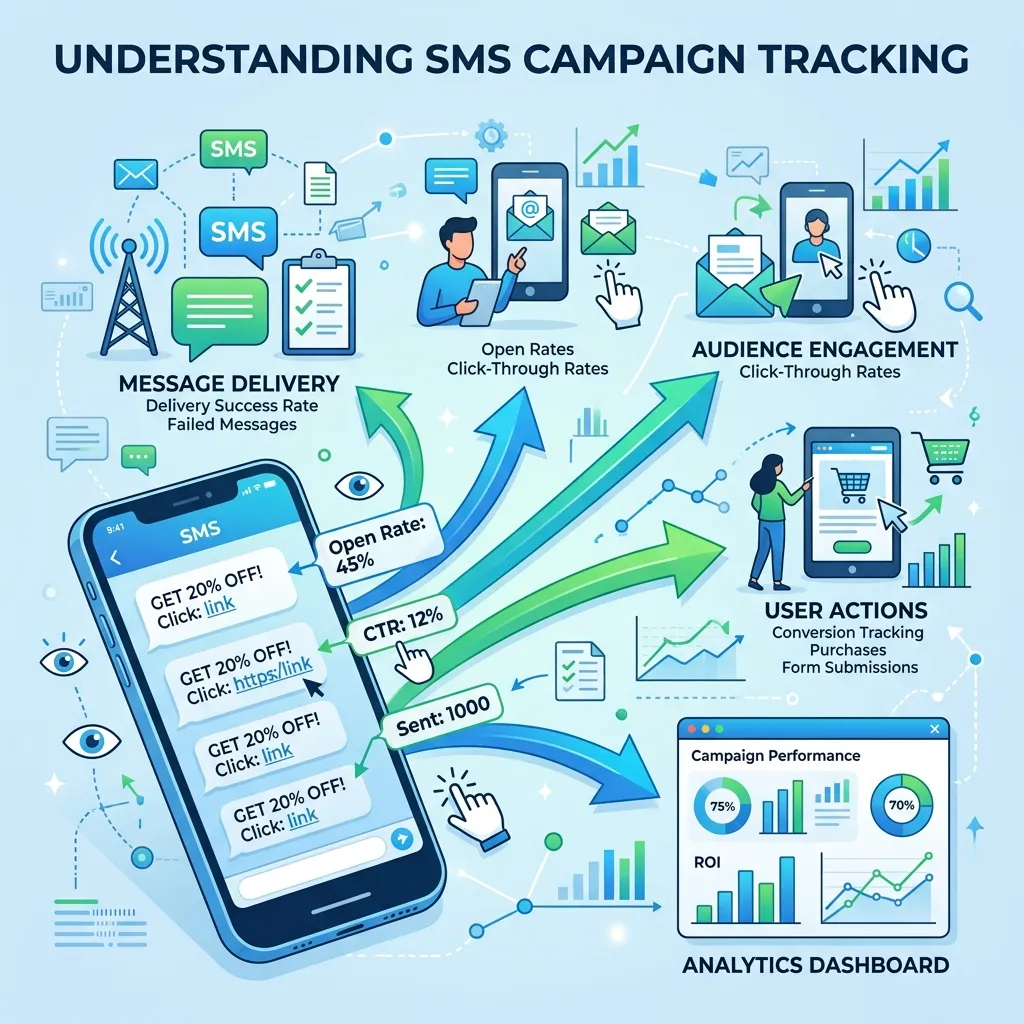
Tracking SMS campaign performance requires a few technical building blocks. Here’s how most marketers set it up.
UTM Parameters
Adding UTM parameters to links inside your SMS messages allows Google Analytics (or any web analytics tool) to attribute website traffic and conversions back to specific campaigns. A well-structured UTM might look like this:
utm_source=sms&utm_medium=text&utm_campaign=summer_sale_2025
With UTMs in place, you can see exactly how many sessions, transactions, and revenue events originated from a given SMS campaign—directly inside your analytics dashboard.
URL Shorteners and Link Tracking
Most SMS platforms automatically shorten URLs to save character space. Many also track link click activity natively, giving you CTR data without needing to configure anything externally.
Phone Number Matching and CRM Integration
For more advanced SMS conversion tracking, businesses connect their messaging platform to a CRM like Salesforce, HubSpot, or Klaviyo. This allows you to map SMS interactions to individual customer records, track multi-touch attribution, and measure how SMS fits into the broader customer journey.
Dedicated Landing Pages
Creating campaign-specific landing pages—ones only accessible via your SMS link—makes it easy to attribute all traffic and conversions to that campaign, even without UTMs.
SMS Marketing Reporting Tools Worth Knowing
The right platform makes SMS marketing analytics far less manual. Here are some of the most capable tools currently available.
Klaviyo
Klaviyo is particularly popular among e-commerce brands. Its SMS analytics dashboard integrates tightly with email and website data, making it easy to see how SMS contributes to revenue across the full customer lifecycle. Klaviyo’s flow analytics also shows how individual automated sequences perform over time.
Attentive
Attentive offers detailed SMS campaign performance reports with a strong focus on revenue attribution. Its reporting suite includes segmentation analysis, A/B test results, and subscriber growth trends—all within a clean, accessible interface.
Postscript
Built specifically for Shopify merchants, Postscript provides granular SMS marketing KPI dashboards that include revenue per recipient, conversion rate by segment, and opt-out trend analysis.
SimpleTexting
SimpleTexting is a solid choice for small to mid-sized businesses. Its reporting covers delivery rates, click tracking, and campaign history, with CSV export for teams that prefer to analyze data in Excel or Google Sheets.
Twilio
Twilio offers API-level access to SMS delivery data, making it a favorite among developers and data teams. It lacks some of the marketer-friendly reporting interfaces of other tools, but offers unmatched flexibility for custom SMS marketing analytics dashboards.
Building an SMS Marketing KPI Dashboard
A well-structured SMS marketing KPI dashboard brings your key metrics into a single view, making it easier to spot trends, catch problems early, and report results to stakeholders.
The most useful dashboards typically include:
- Campaign-level metrics: Delivery rate, CTR, conversion rate, and revenue per message for each campaign sent
- List health metrics: Subscriber growth rate, opt-out rate, and total active subscribers over time
- Revenue metrics: Total SMS-attributed revenue, average order value from SMS, and RPM by campaign type
- Engagement trends: Click activity by time of day, day of week, and audience segment
Tools like Looker Studio (formerly Google Data Studio), Tableau, and native platform dashboards can all be configured to display these metrics automatically. The goal is to reduce the time spent pulling reports so more time can go toward acting on the insights.
How to Calculate SMS Marketing ROI
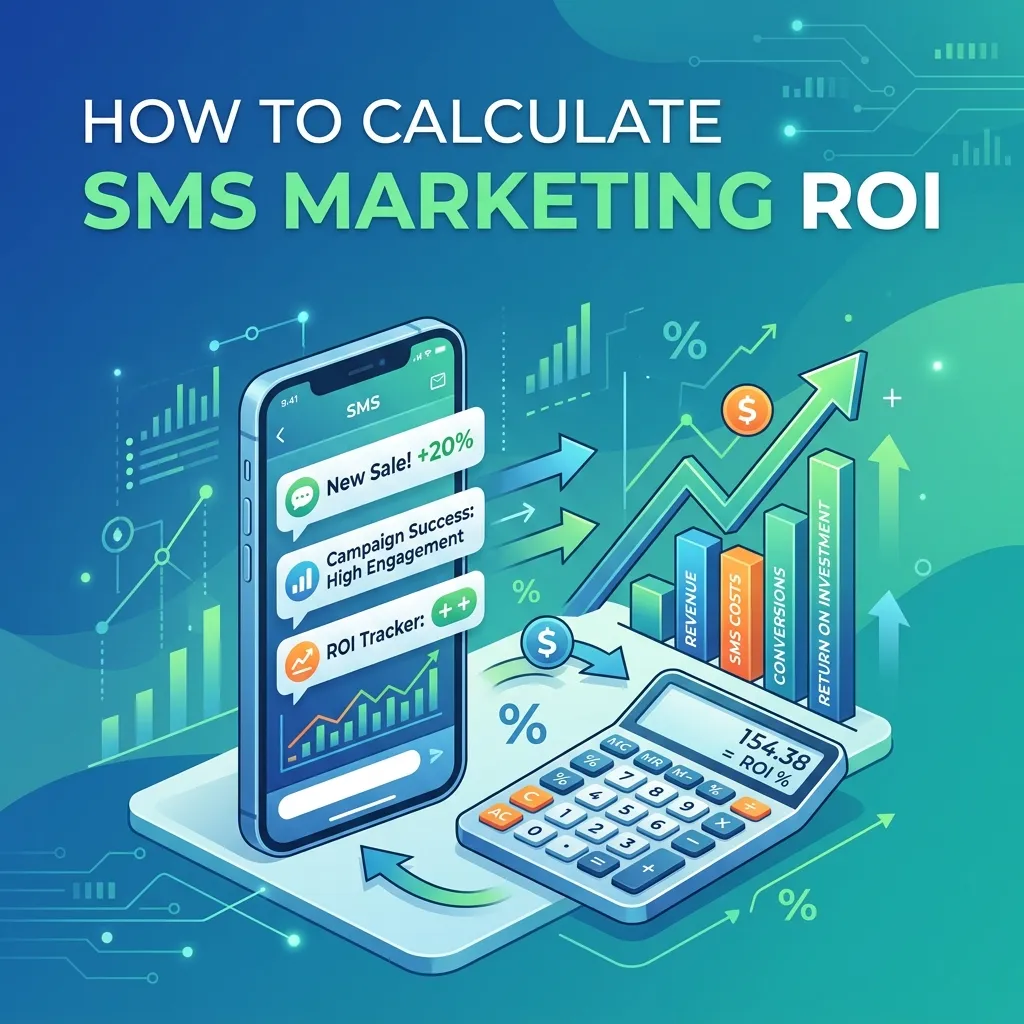
SMS marketing ROI analysis comes down to a straightforward calculation, though attributing revenue accurately requires good tracking infrastructure.
Formula: ((Revenue Generated − Campaign Cost) ÷ Campaign Cost) × 100
For example, if a campaign cost $500 to send and generated $5,000 in revenue, the ROI is 900%.
Campaign costs typically include:
- Per-message send costs (usually $0.01–$0.05 per SMS, depending on the platform and volume)
- Platform subscription fees
- Creative and copywriting time
- Any promotional discounts or incentives embedded in the message
When calculating ROI, be consistent about what you count as “revenue generated.” Platforms vary in how they attribute conversions—some use a 24-hour attribution window, others extend to 5 or 7 days. Standardize your attribution model so comparisons between campaigns are meaningful.
How to Use SMS Engagement Metrics to Improve Future Campaigns
Data without action is just noise. Here’s how to translate SMS engagement metrics into concrete improvements.
Low CTR? Test different calls to action, link placement, or offer types. A/B testing is your best diagnostic tool here.
High opt-out rate? Examine your sending frequency and message relevance. Most subscribers opt out due to over-messaging or receiving content that doesn’t match their interests.
Strong CTR but low conversion rate? The problem is likely on the landing page, not the message. Check page load speed, mobile responsiveness, and offer clarity.
Declining revenue per message over time? Your list may be fatiguing. Consider introducing new segments, refreshing your offer strategy, or running a re-engagement campaign before defaulting to discounts.
Treat each campaign as a learning opportunity. Even campaigns that underperform against benchmarks contain valuable signal—you just need to know where to look.
What Are the Most Important SMS Marketing KPIs by Business Goal?
The right metrics depend on what you’re trying to achieve.
|
Business Goal |
Priority KPIs |
|---|---|
|
Drive immediate sales |
Conversion rate, revenue per message, ROI |
|
Build audience engagement |
CTR, opt-out rate, list growth rate |
|
Improve list quality |
Delivery rate, opt-out rate |
|
Optimize automated flows |
Click activity by message step, conversion by trigger |
|
Prove channel value |
Total SMS-attributed revenue, ROI vs. email |
Turn Your SMS Data into a Competitive Advantage
SMS marketing analytics isn’t about obsessing over numbers—it’s about making your next campaign smarter than your last. The businesses pulling the best results from SMS aren’t sending more messages; they’re sending better ones, informed by data.
Start by getting the fundamentals right: clean tracking setup, consistent KPI monitoring, and a reporting cadence that keeps your team informed. From there, layer in more sophisticated analysis—segmentation performance, attribution modeling, and cross-channel comparisons—as your program matures.
The data is there. The only question is whether you’re using it.
Frequently Asked Questions
What is SMS marketing analytics?
SMS marketing analytics is the practice of tracking and analyzing data from text message campaigns to evaluate their performance. Key metrics include delivery rate, click-through rate, conversion rate, opt-out rate, and revenue per message. The goal is to understand campaign effectiveness and improve future results.
What is a good click-through rate for SMS marketing?
According to SimpleTexting, average SMS click-through rates range from 6% to 19%, depending on the industry and campaign type. Promotional offers and time-sensitive deals tend to generate higher CTRs than informational messages.
How do I track conversions from SMS campaigns?
The most reliable way to track SMS conversions is to combine UTM parameters in your links with a web analytics tool like Google Analytics. You can also use dedicated landing pages or integrate your SMS platform with a CRM to map conversions back to individual campaigns and subscribers.
How do I calculate the ROI of an SMS marketing campaign?
Use the formula: ((Revenue Generated − Campaign Cost) ÷ Campaign Cost) × 100. Make sure to include all campaign costs—platform fees, per-message costs, and any offer discounts—and use a consistent attribution window when calculating revenue generated.
What tools are best for SMS marketing reporting?
Popular SMS marketing reporting tools include Klaviyo, Attentive, Postscript, SimpleTexting, and Twilio. The best choice depends on your business size, e-commerce platform, and how deeply you need to integrate SMS data with other marketing channels.
Why is my SMS delivery rate low?
A low SMS delivery rate is usually caused by list hygiene issues—outdated phone numbers, disconnected lines, or carrier filtering. Regular list cleaning and using a reputable SMS platform with strong carrier relationships can help maintain delivery rates above 95%.
What SMS metrics should I include in a KPI dashboard?
A strong SMS marketing KPI dashboard should include delivery rate, CTR, conversion rate, revenue per message, opt-out rate, subscriber growth, and total SMS-attributed revenue. Breaking these down by campaign type and audience segment makes the data more actionable.
