

A Bulk SMS OTP Service enables businesses to send secure one-time passwords instantly to users for authentication and verification. It powers two-factor authentication (2FA), prevents fraud, and ensures fast, reliable user onboarding at scale. With OTP SMS gateways and APIs, companies can integrate real-time verification into apps and websites, improving both security and user experience.
A bulk SMS OTP service sends one-time passwords to users at scale, enabling fast and secure mobile verification. Businesses use OTP SMS gateways and authentication APIs to power two-factor authentication, reduce fraud, and streamline user onboarding across millions of transactions daily.
Security breaches cost businesses an average of $4.45 million per incident, according to IBM’s 2023 Cost of a Data Breach Report. Yet one of the most effective defenses against unauthorized access remains surprisingly simple: a six-digit code sent to a user’s phone.
OTP-based authentication has become a cornerstone of digital security. Banks, e-commerce platforms, healthcare apps, and SaaS companies all rely on it. But delivering those codes reliably—at scale, in milliseconds, to users across the globe—requires more than just a basic messaging setup. It requires a robust bulk SMS OTP service built for performance, security, and compliance.
This guide covers everything you need to know: how OTP SMS gateways work, what to look for in a bulk OTP SMS provider, how to integrate an OTP authentication API, and why SMS verification remains one of the most trusted methods of two-factor authentication available today.
What Is a Bulk SMS OTP Service?
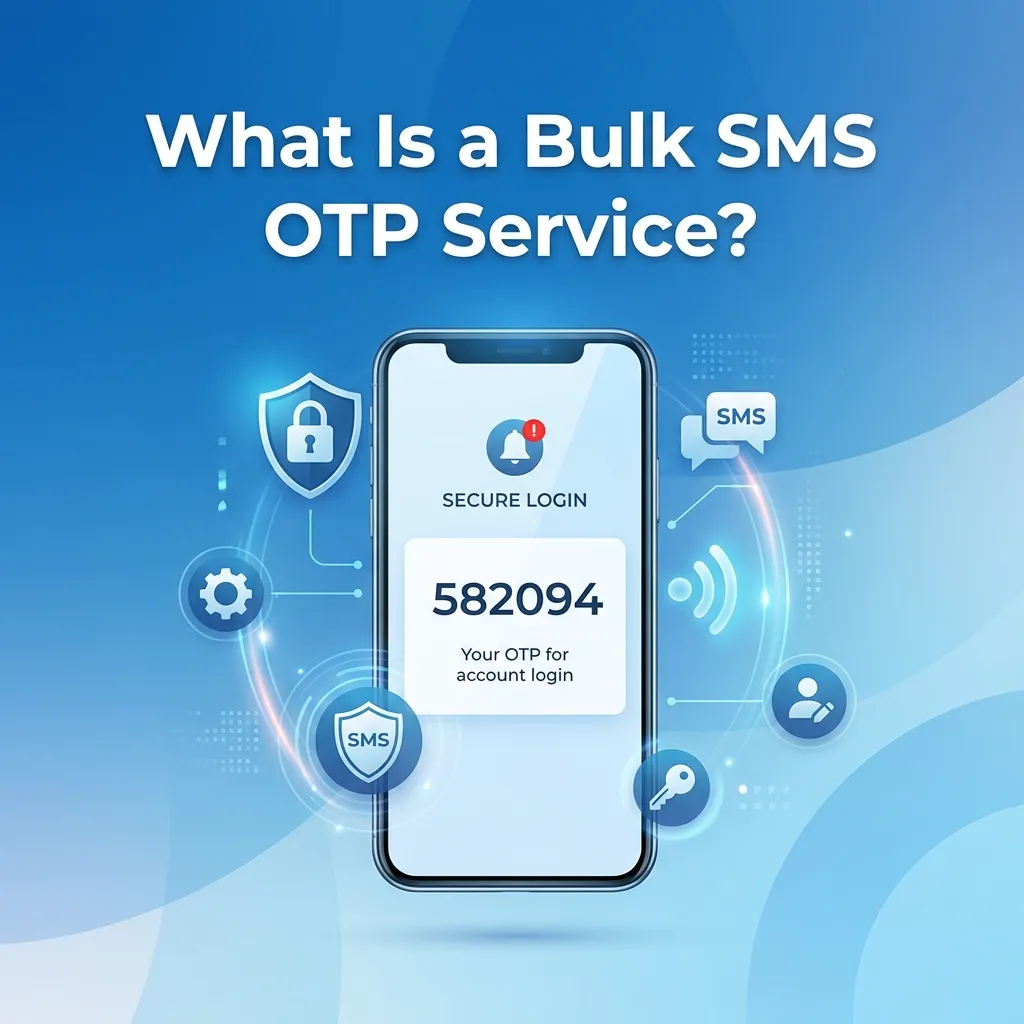
A bulk SMS OTP service is a platform that generates and delivers one-time passwords via SMS to large numbers of users simultaneously. Unlike standard promotional SMS, OTP messages are transactional—they’re triggered by a specific user action (a login attempt, a payment, a password reset) and must arrive within seconds to be useful.
The infrastructure behind this is an OTP SMS gateway: a system that connects your application to mobile network operators worldwide, ensuring that messages are routed through the fastest, most reliable paths available. The faster the delivery, the better the user experience—and the lower the risk of session timeouts or abandoned transactions.
These services are typically accessed through an OTP SMS API, which allows developers to integrate verification functionality directly into web and mobile applications with just a few lines of code.
How Does an OTP SMS Gateway Work?
An OTP SMS gateway acts as the bridge between your platform and the end user’s mobile device. Here’s the basic flow:
- A user initiates an action that requires verification (e.g., logging in or completing a purchase).
- Your application sends a request to the OTP authentication API with the user’s phone number.
- The API generates a unique, time-sensitive code and passes it to the SMS gateway.
- The gateway routes the message through direct carrier connections to ensure fast, reliable delivery.
- The user enters the code into your platform, which validates it against the original request.
The entire process typically takes under five seconds. Any longer, and users drop off. This is why delivery speed and uptime are the two most critical metrics when evaluating an OTP SMS gateway.
What makes a gateway “direct”?
Direct carrier connections bypass third-party aggregators, reducing the number of hops a message takes before it reaches the end user. This translates to faster delivery times, higher deliverability rates, and better visibility into message status—all of which matter when your product depends on real-time authentication.
Why Two-Factor Authentication SMS Still Dominates
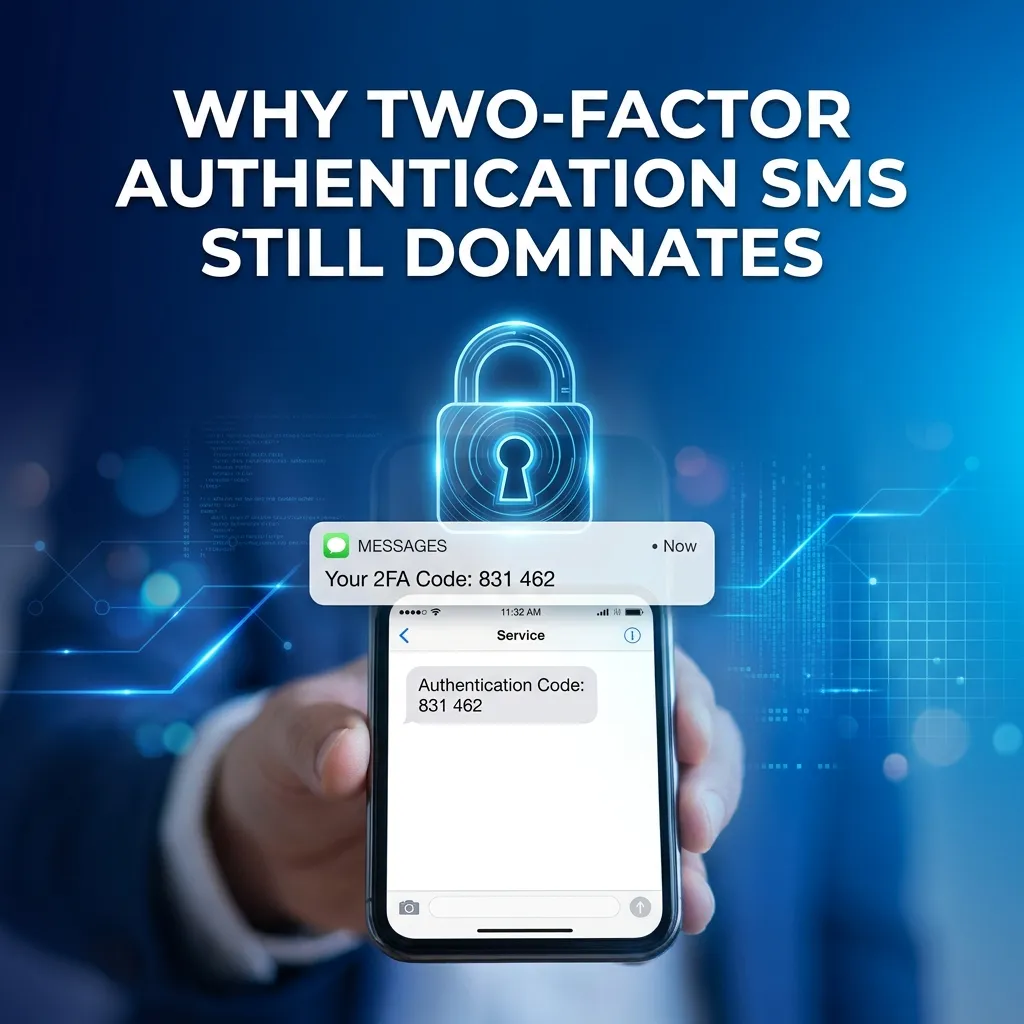
Push notifications, authenticator apps, and biometric verification all have their place. But two-factor authentication SMS continues to lead adoption—particularly in markets where smartphone penetration is high but app usage is fragmented.
A few reasons SMS-based 2FA maintains its dominance:
- No app download required. Users receive codes on their native messaging app, which requires zero setup.
- Works across all phone types. Feature phones, older Android devices, and iPhones all receive SMS reliably.
- Higher completion rates. Friction is the enemy of conversion. SMS OTP reduces the steps between a user and their goal.
- Widely trusted. Users are familiar with the format, which reduces confusion and support tickets.
For businesses operating at scale, these advantages compound. A 2% improvement in verification completion across 10 million monthly users is significant—both for security and revenue.
Key Features to Look for in a Bulk OTP SMS Provider
Not all bulk OTP SMS providers are created equal. When evaluating your options, here are the features that matter most:
Delivery speed and uptime guarantees
Look for providers that offer SLA-backed uptime of 99.9% or higher. OTP messages have a short validity window—typically 30 to 120 seconds—so even minor delays can result in failed verifications and frustrated users.
Global reach through direct carrier connections
If your user base spans multiple countries, your bulk OTP SMS provider needs direct relationships with carriers in those regions. Indirect routing through aggregators increases latency and reduces deliverability, especially in markets with complex telecom regulations.
Intelligent routing and failover
Top-tier providers use intelligent routing to automatically switch to backup routes when primary paths are congested or unavailable. This ensures that a network outage in one region doesn’t take down your entire verification flow.
Real-time delivery reports and analytics
Visibility into delivery status—sent, delivered, failed—allows your team to identify issues before they escalate. Look for providers that offer webhooks or real-time dashboards so you can monitor performance without manual intervention.
Compliance and data security
OTP delivery involves processing personal data (phone numbers). Your provider should be compliant with regional data privacy regulations, including GDPR in Europe and TRAI guidelines in India. Look for ISO 27001 certification as a baseline indicator of security posture.
Scalable pricing
A bulk SMS verification service should offer pricing that scales with your volume—whether you’re sending 10,000 OTPs per month or 10 million. Watch out for providers that charge premium rates for transactional messages or apply hidden surcharges for international delivery.
How to Integrate an OTP Authentication API
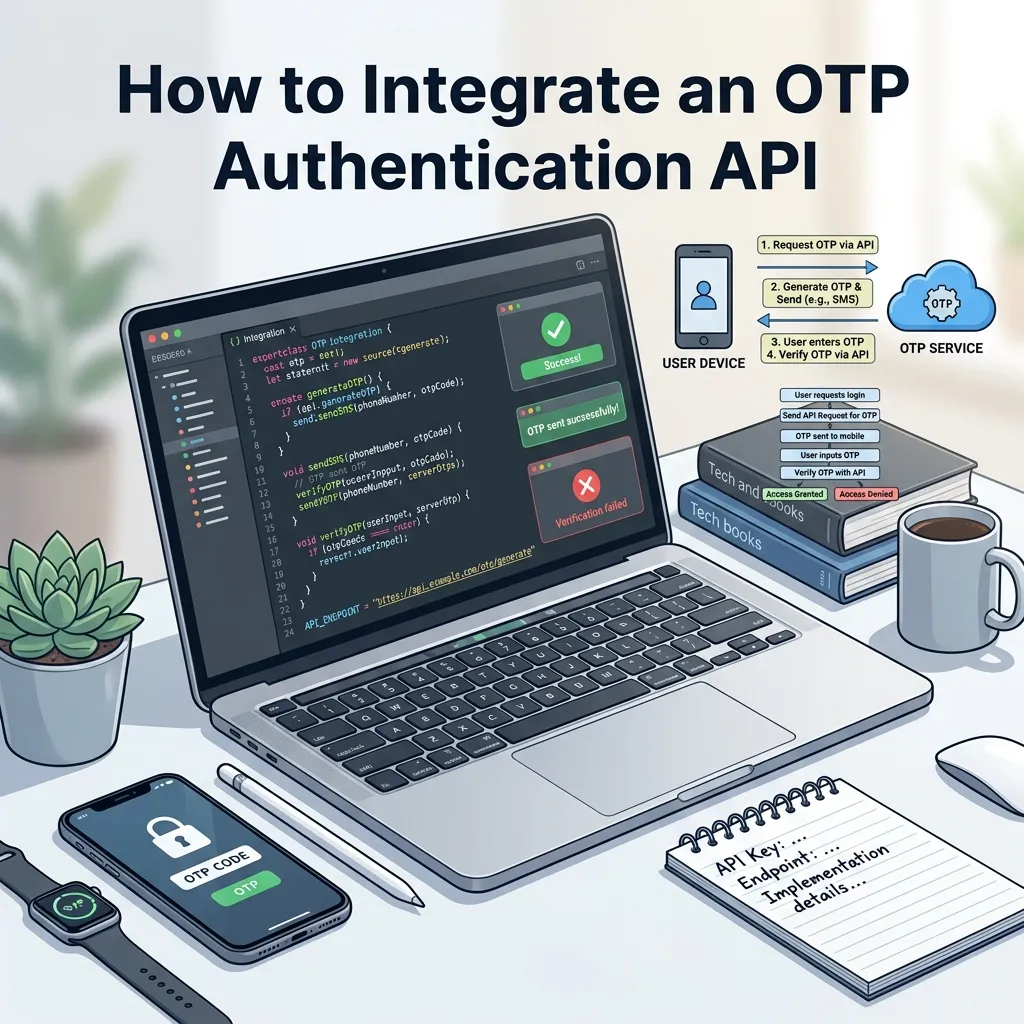
Integrating an OTP SMS API into your application is typically straightforward. Most modern providers offer RESTful APIs with comprehensive documentation, SDKs for popular programming languages, and sandbox environments for testing before going live.
Here’s a general integration workflow:
- Sign up and obtain API credentials. Most providers issue an API key and secret that authenticate your requests.
- Configure your sender ID. This is the name or number that appears as the sender on the user’s device. Branded sender IDs improve trust and open rates.
- Set OTP parameters. Define the code length (typically 4–8 digits), expiry time, and retry limits.
- Make an API call. Pass the recipient’s phone number and your OTP parameters to the API endpoint. The service generates and sends the code.
- Validate user input. When the user submits the code, your application calls the API again to verify it against the original request.
- Handle edge cases. Build logic for expired codes, incorrect entries, and retry limits to prevent brute-force attacks.
Most developers complete a basic integration in under a day. More complex implementations—with custom retry logic, multi-channel fallback (SMS + voice), and analytics integrations—may take a few days to a week.
Bulk SMS Verification Service vs. Standard Transactional SMS
The terms “transactional SMS” and “OTP SMS” are often used interchangeably, but there’s an important distinction worth understanding.
A transactional SMS service covers any message sent in response to a user action—order confirmations, shipping alerts, appointment reminders. These messages are informational. They don’t require a response and have no strict time sensitivity.
A bulk SMS verification service, by contrast, is specifically optimized for authentication. The infrastructure is tuned for speed, reliability, and security in ways that generic transactional SMS platforms may not be.
When your use case is authentication—login, payment confirmation, account recovery—choose a provider that specializes in OTP delivery rather than defaulting to a general-purpose transactional SMS service. The difference in delivery performance and security controls is material.
Common Use Cases for Secure SMS OTP Solutions
Across industries, secure SMS OTP solutions are deployed wherever trust and identity verification matter:
- Financial services: Authorizing transactions, verifying new account sign-ups, and preventing unauthorized transfers.
- E-commerce: Confirming high-value orders, securing account logins, and validating address changes.
- Healthcare: Authenticating patient portal access and protecting sensitive medical records.
- Ride-sharing and gig platforms: Verifying driver and rider identities during onboarding.
- SaaS and enterprise software: Protecting admin access and enforcing 2FA policies for compliance.
- Gaming: Reducing account takeovers and verifying age or location where required.
Each of these use cases shares the same core requirement: a code that arrives fast, works every time, and cannot be predicted or reused.
Mobile OTP Verification Best Practices
Deploying mobile OTP verification effectively means thinking beyond the API call. Here are the practices that separate reliable implementations from fragile ones:
Keep validity windows short. A 60-to-90-second expiry balances usability with security. Longer windows increase exposure to interception or reuse.
Limit retry attempts. Cap failed verification attempts at three to five before locking the request. This prevents brute-force attacks without creating excessive friction for legitimate users.
Use numeric codes only. Alphanumeric codes are harder to read and transcribe quickly. Numeric-only codes reduce user error and improve completion rates.
Communicate the code clearly. Message copy matters. A message that reads “Your [Brand] verification code is 482916. Valid for 60 seconds. Do not share.” is clearer and more trustworthy than a bare code with no context.
Enable multi-channel fallback. If an SMS fails to deliver, a voice call that reads the code aloud ensures the user isn’t locked out. Top providers support this natively.
Frequently Asked Questions
What is the difference between an OTP SMS gateway and a bulk SMS provider?
An OTP SMS gateway is specifically optimized for delivering time-sensitive authentication codes with high speed and reliability. A general bulk SMS provider may handle promotional and transactional messages without the same infrastructure focus on low-latency OTP delivery.
How fast does OTP SMS delivery need to be?
Most OTP codes have a validity window of 30 to 120 seconds. For a good user experience, delivery should occur within 3 to 5 seconds of the API request. Delays beyond 10 seconds significantly increase abandonment rates.
Is SMS OTP secure enough for high-risk transactions?
SMS OTP is widely used for high-value transactions in banking and fintech, though it’s generally considered a medium-assurance method. For the highest-risk scenarios, some organizations layer SMS OTP with additional controls such as device fingerprinting or behavioral analytics.
What regulations apply to sending OTP SMS?
Requirements vary by country. In the US, the TCPA governs consent requirements. In India, TRAI mandates DLT registration for transactional messages. In Europe, GDPR applies to the processing of phone numbers. Your bulk OTP SMS provider should support compliance in every region you operate in.
How much does a bulk SMS OTP service cost?
Pricing varies by provider, volume, and destination country. Most providers charge per message, with rates ranging from $0.005 to $0.05 per SMS depending on the region. Higher-volume commitments typically unlock lower per-message rates.
Can I use a single OTP authentication API for multiple applications?
Yes. Most enterprise-grade OTP authentication APIs support multi-application configurations under a single account, with separate sender IDs, analytics, and rate limits for each application.
What is a Bulk SMS OTP Service?
A Bulk SMS OTP Service is a system that sends one-time passwords to users’ mobile phones for secure authentication during login, registration, or transactions.
How does a Bulk SMS OTP Service work?
It generates a unique OTP, sends it via an SMS gateway to the user’s phone, and verifies the code when the user enters it in the system.
Why is OTP SMS important for security?
OTP SMS adds an extra layer of protection by ensuring only the authorized user with the registered mobile number can access the account.
Where is Bulk SMS OTP Service commonly used?
It is widely used in banking, fintech apps, e-commerce platforms, healthcare systems, and SaaS applications for secure login and verification.
Is Bulk SMS OTP Service secure?
Yes, it is considered secure when combined with encryption, short expiry times, and proper API-based authentication systems.
What is an OTP SMS gateway?
An OTP SMS gateway is the infrastructure that delivers OTP messages from your application to the user’s mobile network quickly and reliably.
How fast is OTP delivery in Bulk SMS OTP Service?
Most OTPs are delivered within 3–5 seconds, ensuring real-time authentication and smooth user experience.
Can Bulk SMS OTP Service prevent fraud?
Yes, it significantly reduces unauthorized access, account takeovers, and fraudulent transactions by verifying user identity.
What is an OTP authentication API?
An OTP authentication API allows developers to integrate OTP generation and verification directly into their applications.
How do I choose the best Bulk SMS OTP Service provider?
Look for providers with high delivery speed, global carrier connections, strong security compliance, real-time reporting, and scalable pricing.
Choosing the Right Bulk SMS OTP Service for Your Business
Reliable, fast, and secure OTP delivery is a business-critical capability—not an afterthought. The bulk SMS OTP service you choose will directly affect user experience, security posture, and the integrity of every transaction that flows through your platform.
Prioritize providers with direct carrier connections, transparent SLAs, real-time analytics, and strong compliance credentials. Test delivery performance in your key markets before committing. And ensure your integration uses retry logic, fallback channels, and short validity windows from day one.
The best OTP SMS gateway for your business is one you never have to think about—because it simply works, every time, for every user.
