

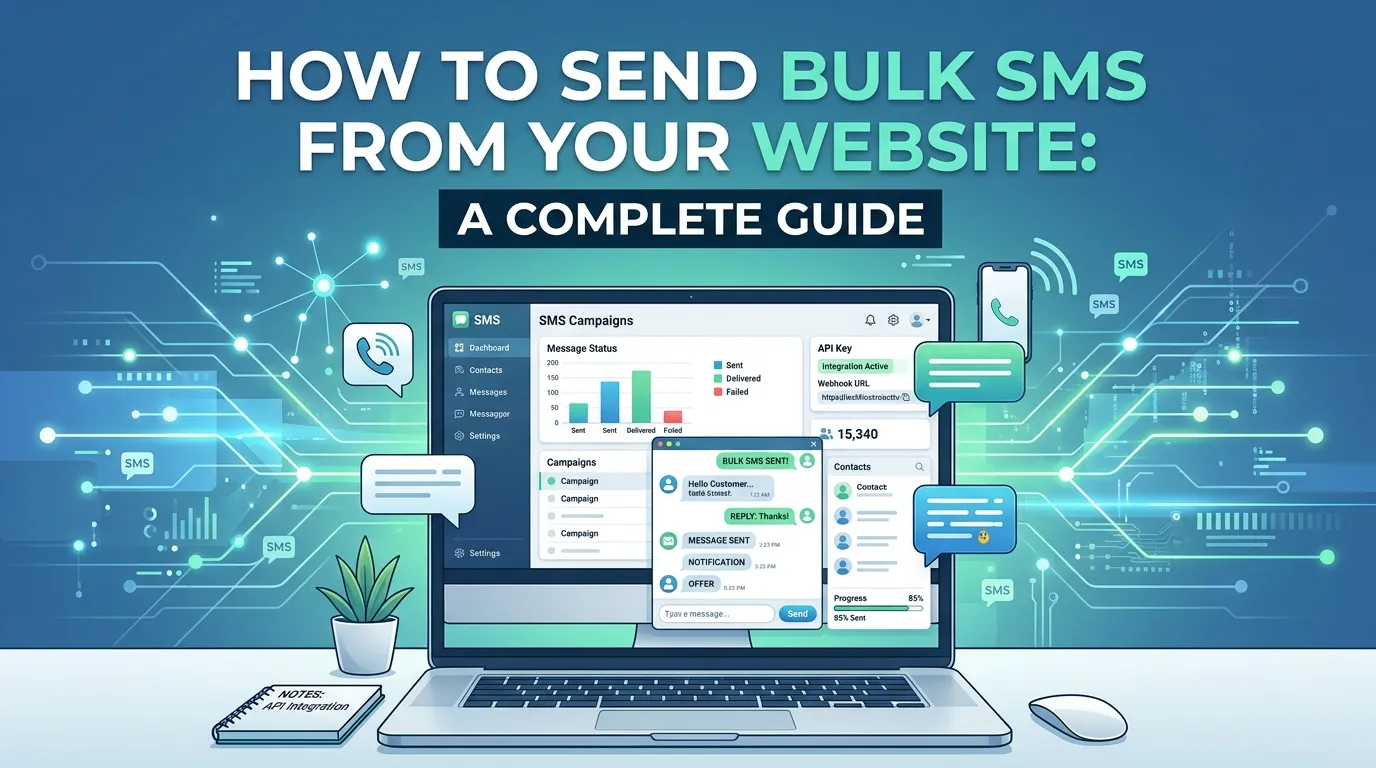
Bulk SMS from Website solutions allow businesses to send promotional messages, alerts, reminders, and notifications directly from their websites using SMS gateways and messaging platforms. By integrating a bulk SMS service, businesses can automate communication, improve customer engagement, and reach large audiences instantly through one of the most effective communication channels available.
To send bulk SMS from your website, integrate an SMS gateway or API with your site, upload or sync your contact list, then create and schedule messages through a bulk SMS platform. This lets you send mass texts, automate notifications, and run marketing campaigns directly from your website’s backend—no manual sending required.
Text messages get read. While the average marketing email sits unopened in a crowded inbox, most SMS messages are opened within minutes of arriving. That difference is exactly why so many businesses now want to send bulk SMS straight from their websites.
But setting up bulk text messaging can feel confusing if you’ve never done it before. What’s an SMS gateway? How do you connect it to your site? And how do you go from sending one text to reaching thousands of customers at once?
This guide breaks down everything you need to know. You’ll learn how website SMS marketing works, how to integrate bulk SMS into your site, and how to use automated notifications and mass campaigns to grow your business. By the end, you’ll have a clear path to sending your first bulk message.
What Is Website SMS Marketing?
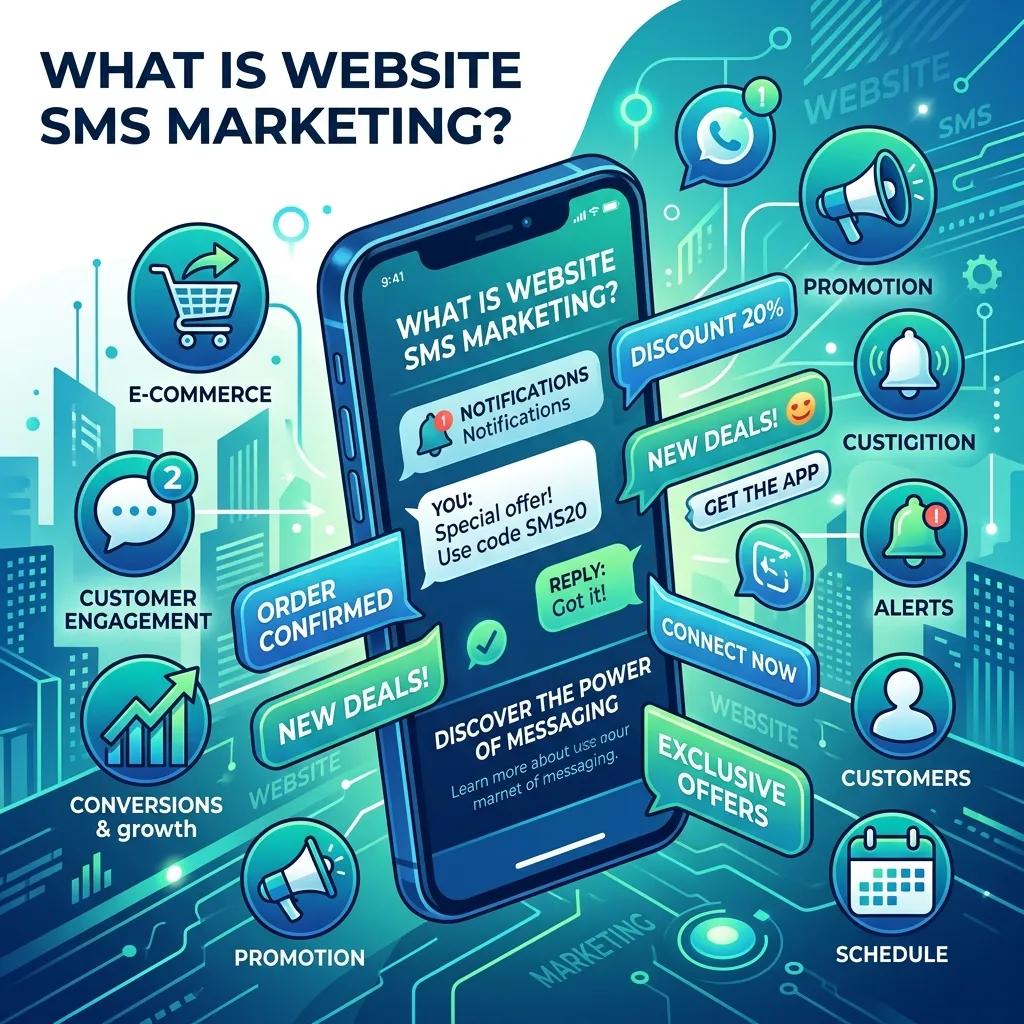
Website SMS marketing is the practice of collecting phone numbers through your website and sending text messages to those contacts for promotions, updates, and alerts. Instead of relying only on email or social media, you reach customers directly on their phones.
The numbers make a strong case. SMS open rates regularly hover around 98%, far ahead of email’s typical 20%. Most texts are also read within three minutes of delivery. For time-sensitive offers, appointment reminders, or flash sales, that speed is hard to beat.
A few common uses include:
- Promotional offers: Discount codes, sale announcements, and limited-time deals.
- Transactional messages: Order confirmations, shipping updates, and receipts.
- Reminders: Appointment alerts, payment due dates, and event notifications.
- Customer engagement: Surveys, feedback requests, and loyalty rewards.
Website SMS marketing works best when customers opt in. A signup form on your site lets visitors share their numbers willingly, which keeps you compliant with regulations and improves engagement.
How Does Bulk SMS Integration Work?
Bulk SMS integration connects your website to an SMS service so you can send texts without leaving your platform. The link between the two is usually built through an API (application programming interface) or a plugin.
Here’s the basic flow:
- A customer submits their number through a form on your site.
- Your website stores the number in a database or contact list.
- The SMS platform pulls that data when you trigger a message.
- The SMS gateway sends the text to your customer’s phone.
Most modern platforms offer ready-made integrations for popular website builders like WordPress, Shopify, and Wix. If you use a custom-built site, an API gives developers the flexibility to connect SMS features directly into your existing workflow.
The benefit of integration is automation. Once it’s set up, your site can send messages on its own—triggered by a purchase, a signup, or a scheduled campaign—without anyone pressing send.
How to Send SMS From Your Website
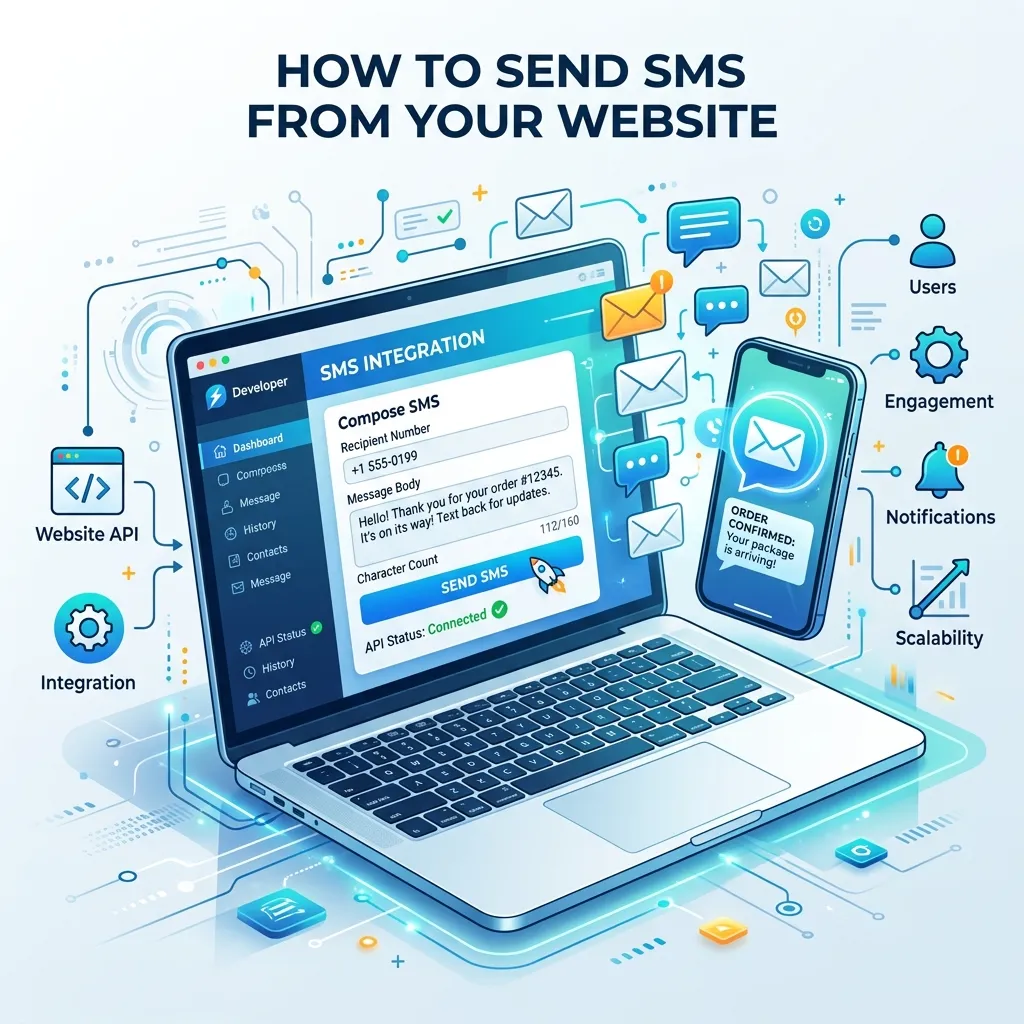
Sending SMS from your website comes down to a few clear steps. While the exact process varies by provider, the framework stays the same.
Step 1: Choose an SMS Provider
Pick a bulk SMS service that matches your needs. Look at pricing, delivery rates, supported countries, and whether they offer the integrations you need. Some providers specialize in marketing, while others focus on transactional alerts.
Step 2: Set Up Your Integration
Install the provider’s plugin or connect their API to your website. For platforms like WordPress or Shopify, this often takes just a few clicks. For custom sites, your developer will use API keys to link the service.
Step 3: Build Your Contact List
Add opt-in forms to your site so visitors can subscribe. Place them on checkout pages, blog posts, or pop-ups. Always get clear consent before adding anyone to your list.
Step 4: Create Your Message
Write a short, clear message. Most SMS texts cap at 160 characters, so make every word count. Include a call to action and, where required, an opt-out option like “Reply STOP to unsubscribe.”
Step 5: Send or Schedule
Send your message immediately, or schedule it for a specific time. Many platforms also let you set up automated triggers, so a text fires the moment a customer takes an action.
What to Look for in an Online Bulk SMS Service
Choosing the right bulk SMS service shapes how well your campaigns perform. Not every provider offers the same features, so it pays to compare carefully.
Key things to evaluate:
- Delivery rates: Higher delivery rates mean more messages actually reach phones.
- Global coverage: If you serve customers abroad, check which countries are supported.
- Pricing model: Some charge per message, others use monthly plans. Match this to your volume.
- Integration options: Look for plugins or APIs that fit your website setup.
- Analytics: Reporting on open rates, clicks, and replies helps you improve over time.
- Compliance tools: Built-in opt-out handling keeps you on the right side of the law.
Choose a provider with strong API documentation if your team plans to build custom features. Choose a plug-and-play platform if speed of setup matters more than flexibility.
How Does an SMS Gateway for Your Website Function?
An SMS gateway is the technology that converts your digital message into a text that mobile networks can deliver. Think of it as the bridge between your website and the phone carriers.
When you send a message, the gateway receives it from your platform, formats it correctly, and routes it through the appropriate carrier network. All of this happens in seconds. Without a gateway, your website would have no way to communicate with mobile devices.
Gateways also handle two-way messaging. If a customer replies to your text, the gateway routes that response back to your system. This makes interactive campaigns—like surveys or appointment confirmations—possible.
For most businesses, the gateway runs behind the scenes through your chosen SMS provider. You don’t need to manage the technical side yourself, but understanding its role helps you appreciate why delivery rates and provider quality matter so much.
Choosing a Website Text Messaging Platform

A website text messaging platform is the dashboard where you manage contacts, write messages, and track results. The right platform makes bulk messaging simple, even for non-technical teams.
Good platforms share a few traits. They offer an easy-to-use interface, reliable delivery, solid reporting, and integrations that match your tools. Many also include templates, contact segmentation, and automation features that save time.
When comparing platforms, think about scale. A small business sending a few hundred texts a month has different needs than an enterprise running campaigns to tens of thousands. Pick a platform that can grow with you, so you don’t have to switch providers later.
How to Run Mass SMS Campaigns
Mass SMS campaigns let you reach your entire audience—or a targeted segment—with a single message. Done well, they drive sales, boost engagement, and keep your brand top of mind.
To run an effective campaign:
- Segment your audience: Group contacts by behavior, location, or purchase history so messages stay relevant.
- Time it right: Send during business hours, and avoid early mornings or late nights.
- Personalize where possible: Adding a first name or tailored offer lifts response rates.
- Keep it short: Get to the point fast, and include one clear action.
- Track results: Measure delivery, replies, and conversions to refine future sends.
A well-segmented campaign almost always outperforms a generic blast. Sending the right message to the right group beats sending the same text to everyone.
What Are Automated SMS Notifications?
Automated SMS notifications are texts that send themselves based on triggers or schedules. Instead of writing each message by hand, you set the rules once and let the system handle the rest.
Common examples include:
- Order confirmations sent the moment a purchase is made.
- Shipping updates when a package leaves the warehouse.
- Appointment reminders a day before a booking.
- Abandoned cart alerts when a shopper leaves items behind.
Automation saves time and keeps communication consistent. Customers get the information they need exactly when they need it, and your team isn’t stuck sending repetitive texts manually.
Business SMS Solutions for Different Industries
Business SMS solutions adapt to almost any industry. The core technology stays the same, but the way companies use it varies widely.
- Retail and e-commerce: Promotions, order updates, and abandoned cart reminders.
- Healthcare: Appointment reminders and prescription alerts.
- Hospitality: Booking confirmations and check-in details.
- Finance: Fraud alerts, payment reminders, and account notifications.
- Education: Enrollment updates, schedule changes, and emergency alerts.
The flexibility of SMS makes it valuable across the board. Whatever your sector, there’s likely a way to use text messaging to improve customer communication.
Picking the Right Bulk Text Messaging Software
Bulk text messaging software ties everything together—integration, campaigns, automation, and reporting—into one tool. The best choice depends on your goals, budget, and technical resources.
Before you commit, ask:
- Does it integrate with my website and existing tools?
- Can it scale as my contact list grows?
- Are the delivery rates and coverage strong enough for my audience?
- Does it include automation and segmentation features?
- Is the pricing sustainable for my message volume?
Test a provider with a free trial or small campaign before going all in. Real-world performance tells you far more than a feature list ever could.
Start Sending Smarter Messages Today
Bulk SMS from your website turns a simple text into a powerful marketing channel. With high open rates, fast delivery, and the ability to automate, it’s one of the most direct ways to reach your customers.
Start small. Choose a provider, set up a simple integration, and build an opt-in list. Once you see how quickly customers respond, you can expand into segmented campaigns and automated notifications.
The technology is ready and the setup is easier than ever. Your next step is to pick a platform and send your first message.
Frequently Asked Questions
How much does it cost to send bulk SMS from a website?
Costs vary by provider and volume. Many services charge per message, often a few cents each, while others offer monthly plans with bundled credits. High-volume senders usually get better per-message rates. Compare pricing models against your expected send volume to find the most cost-effective option.
Do I need coding skills to integrate bulk SMS into my website?
Not always. Platforms like WordPress, Shopify, and Wix offer plugins that require little to no coding. For custom-built websites, you’ll likely need a developer to connect the provider’s API. If technical resources are limited, choose a plug-and-play platform designed for non-technical users.
Is bulk SMS marketing legal?
Yes, but it comes with rules. Most regions require explicit opt-in consent before you text someone, plus an easy way to opt out (like replying STOP). Regulations such as the TCPA in the US set these standards. Always check the laws in the regions where your customers live.
How fast are bulk SMS messages delivered?
Most bulk SMS messages arrive within seconds to a few minutes. Delivery speed depends on your provider, the SMS gateway, and carrier networks. Reputable providers with strong infrastructure deliver messages quickly and reliably, which is why provider quality matters for time-sensitive campaigns.
What’s the difference between an SMS gateway and an SMS platform?
An SMS gateway is the underlying technology that routes messages between your website and mobile carriers. An SMS platform is the dashboard you use to manage contacts, write messages, and track results. The platform relies on the gateway to actually deliver your texts.
What does Bulk SMS from Website mean?
Bulk SMS from Website refers to sending large volumes of text messages directly through a website using an SMS gateway, API, or messaging platform to communicate with customers efficiently.
How can I send Bulk SMS from Website?
You can send Bulk SMS from Website by integrating an SMS gateway or API, building an opt-in contact list, creating your message, and sending or scheduling campaigns through an SMS platform.
Do I need technical skills to set up Bulk SMS from Website?
Not necessarily. Many platforms offer plugins for WordPress, Shopify, and other website builders that require little to no coding. Custom websites may require API integration by a developer.
What are the benefits of using Bulk SMS from Website?
Bulk SMS from Website helps businesses reach customers instantly, increase engagement, automate notifications, improve response rates, and support marketing campaigns with high message visibility.
Is Bulk SMS from Website effective for marketing?
Yes. SMS messages typically have very high open rates and fast read times, making Bulk SMS from Website one of the most effective channels for promotions, announcements, and customer engagement.
Can I automate messages with Bulk SMS from Website?
Yes. Most Bulk SMS from Website platforms support automation for order confirmations, appointment reminders, abandoned cart alerts, delivery updates, and other customer notifications.
What industries benefit from Bulk SMS from Website?
Retail, healthcare, education, finance, hospitality, eCommerce, and service-based businesses commonly use Bulk SMS from Website to improve communication and customer experience.
How much does Bulk SMS from Website cost?
Pricing depends on the provider, destination country, and message volume. Most services charge per message, while some offer monthly plans with bundled SMS credits.
Is Bulk SMS from Website legal?
Yes, provided you obtain customer consent and follow local SMS marketing regulations. Most providers include opt-out management tools to help maintain compliance.
