

A Cheap OTP SMS provider helps businesses send secure one-time passwords at low cost without compromising speed, reliability, or global delivery. The best solutions offer transparent pricing, fast API-based integration, and strong carrier routes, ensuring users receive OTPs instantly while keeping authentication systems scalable and secure.
A cheap OTP SMS provider delivers one-time passcodes at a low per-message rate while maintaining fast delivery and high reliability. The best affordable options combine competitive pricing, a developer-friendly API, strong global coverage, and transparent billing—so you save money without risking failed logins or security gaps.
Sending one-time passwords (OTPs) shouldn’t drain your budget. Yet many businesses overpay for SMS verification, locked into contracts with hidden fees and inflated per-message rates. If you’re building a login flow, securing transactions, or rolling out two-factor authentication, the cost of every text adds up fast—especially as your user base grows.
The good news? You can find an affordable OTP SMS service that keeps prices low without sacrificing speed or security. The trick is knowing what to look for, which features actually matter, and where providers tend to hide costs.
This guide breaks down everything you need to choose a low-cost OTP SMS gateway with confidence. You’ll learn how OTP SMS works, what drives pricing, how to compare providers, and how to integrate an OTP verification SMS API into your app. By the end, you’ll know exactly how to balance cost and quality.
What Is an OTP SMS Provider, and How Does It Work?
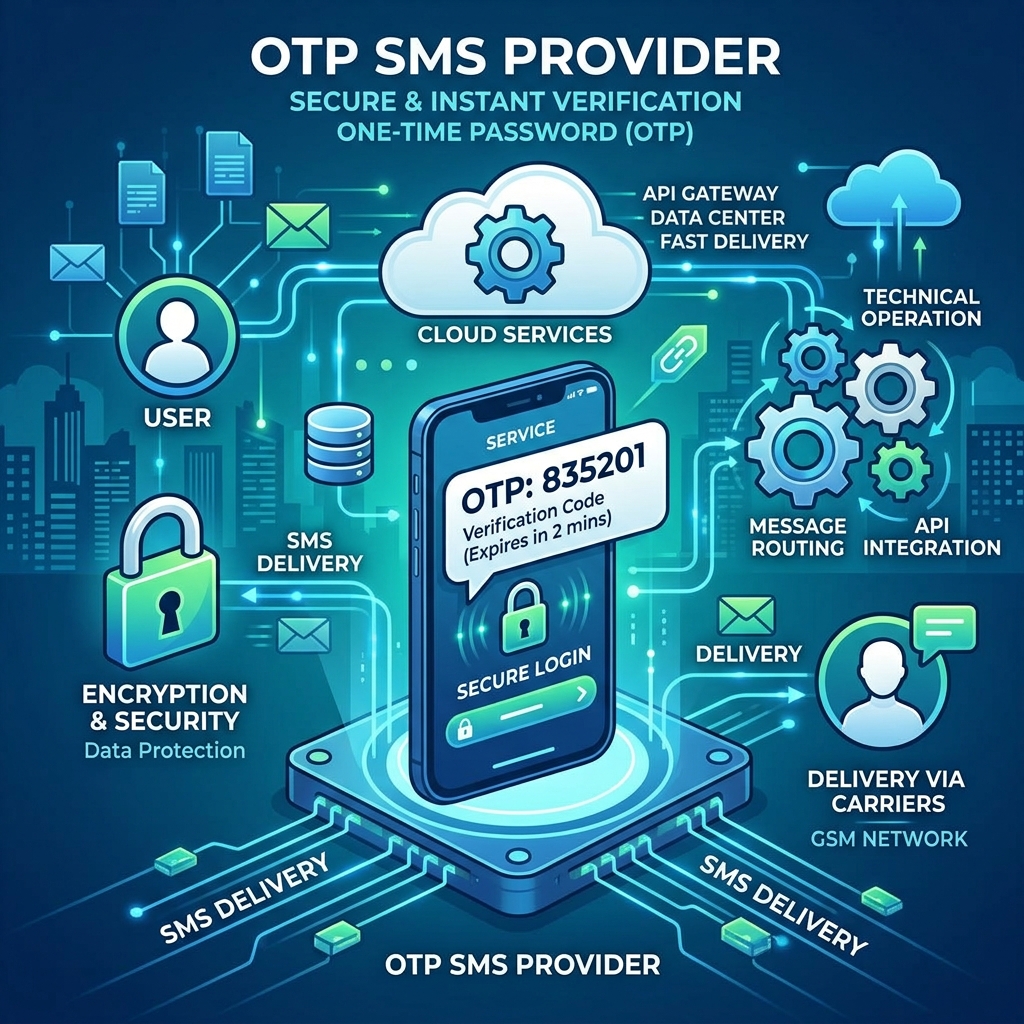
An OTP SMS provider is a service that sends one-time passcodes to users via text message. These short, time-sensitive codes verify a user’s identity during login, signup, password resets, or transactions.
Here’s the basic flow:
- A user enters their phone number on your app or website.
- Your system requests a code through an OTP SMS API.
- The provider routes the message through a carrier network.
- The user receives the code and enters it to verify their identity.
This process powers two-factor authentication (2FA), a security layer that protects accounts even if a password is stolen. Because OTPs expire quickly—often within a few minutes—they’re far harder for attackers to exploit.
OTP messages fall under transactional SMS, meaning they’re triggered by a user action and carry important, time-sensitive information. Unlike promotional texts, transactional messages usually get priority routing for faster delivery.
Why Does OTP SMS Pricing Vary So Much?
SMS verification costs differ widely between providers, and the reasons aren’t always obvious. Understanding what drives pricing helps you spot a genuinely affordable OTP SMS service versus one that just looks cheap upfront.
Several factors shape the final price:
- Destination country: Sending an OTP to a user in India costs far less than sending one to Germany or the United States. Carrier fees vary by region.
- Message volume: Many providers offer tiered pricing. The more messages you send, the lower your per-message rate—which is why a bulk OTP SMS provider often wins on cost at scale.
- Routing quality: Cheaper “grey routes” cut costs but risk delays and failed deliveries. Premium direct routes cost more but deliver reliably.
- Hidden fees: Watch for setup charges, monthly minimums, and per-number rental costs that inflate the real price.
A low-cost OTP SMS gateway should be transparent about all of these. If a provider only advertises a headline rate without explaining regional pricing or routing, treat that as a warning sign.
What Features Should a Cheap OTP SMS Provider Offer?
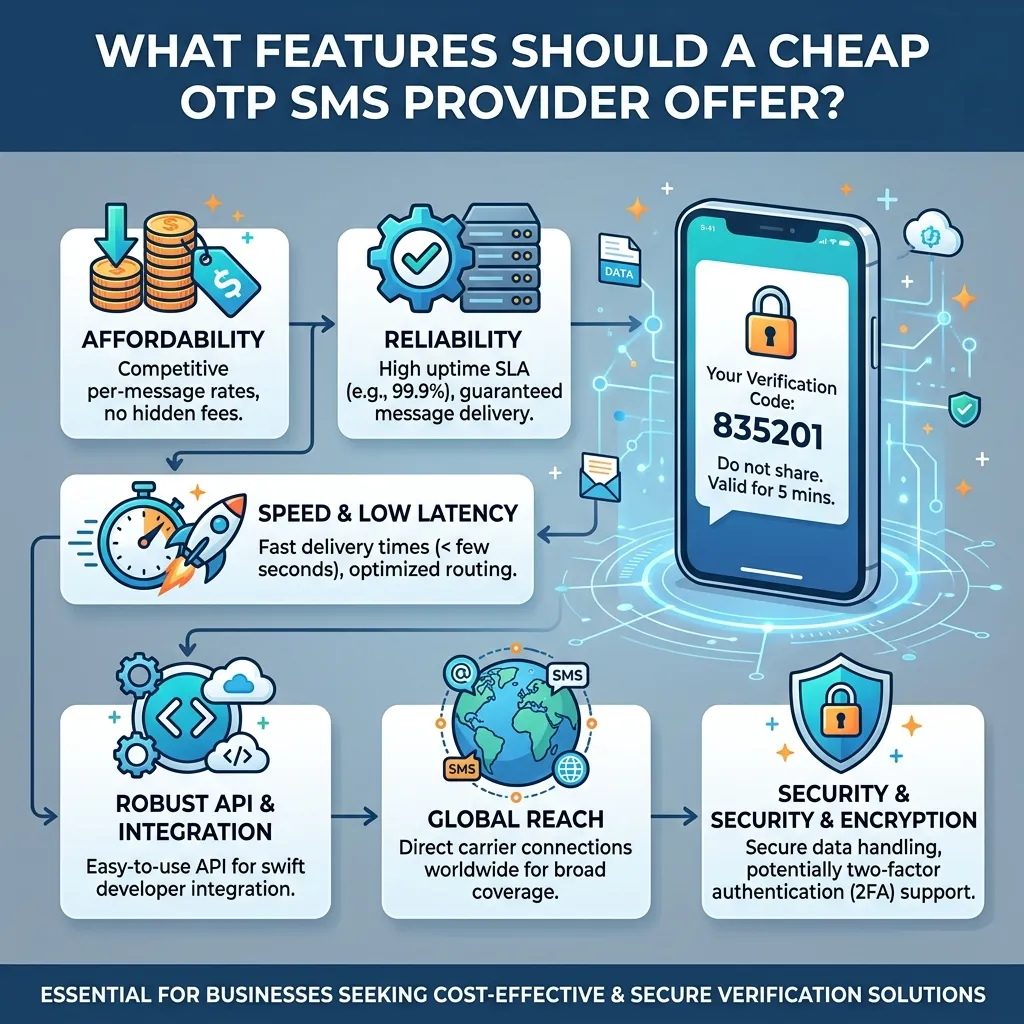
Low price means little if messages arrive late or never show up. The best affordable OTP delivery platforms balance cost with the features that keep your verification flow secure and reliable.
Fast and Reliable Delivery
OTP codes are useless if they arrive after the code expires. Look for a provider with high delivery rates and direct carrier connections. Delivery speed matters most here—users abandon signups when codes lag.
Global Coverage
If your users span multiple countries, you need a provider with broad network reach. Strong global coverage ensures your two-factor authentication SMS reaches users wherever they are, without routing failures.
A Developer-Friendly OTP Verification SMS API
A clean, well-documented OTP SMS API saves engineering time and reduces integration headaches. Look for REST APIs, SDKs in popular languages, and clear documentation with code samples.
Delivery Reports and Analytics
Real-time delivery receipts let you track whether codes reached users. This visibility helps you spot routing problems early and prove that your secure OTP messaging service is performing.
Security and Compliance
A trustworthy SMS verification service follows data protection regulations and offers features like sender ID customization and message encryption in transit. For 2FA, security isn’t optional.
How Do You Choose the Right Low-Cost OTP SMS Gateway?
Picking a provider comes down to matching their strengths to your needs. Use these criteria to compare options.
Choose based on volume. If you send thousands of codes daily, prioritize a bulk OTP SMS provider with volume discounts. If your needs are small, look for pay-as-you-go pricing with no monthly minimum.
Choose based on geography. Sending mostly to one region? Pick a provider with strong direct routes to that area. Serving a global audience? Prioritize coverage breadth over a single low regional rate.
Choose based on technical needs. If your team wants quick setup, favor a provider with a plug-and-play OTP SMS API integration and pre-built SDKs. If you need custom workflows, look for flexible webhook support.
Choose based on reliability requirements. For high-stakes logins—banking, healthcare, finance—pay a little more for premium routing. A failed OTP can mean a locked-out customer and a lost sale.
The cheapest option on paper isn’t always the most affordable in practice. A provider with a slightly higher rate but a 99% delivery rate often costs less than a “cheap” one with frequent failures that force costly retries.
How Do You Integrate an OTP SMS API?
Most modern providers make OTP SMS API integration straightforward. While exact steps vary, the process usually follows this pattern:
- Sign up and get API credentials. Create an account and generate an API key from your dashboard.
- Choose your sending method. Decide whether you’ll generate codes yourself or use the provider’s built-in OTP verification feature.
- Make an API call. Send a request with the recipient’s phone number and message content. The provider handles routing and delivery.
- Verify the code. When the user enters their code, check it against the one you sent—or use the provider’s verification endpoint.
- Handle delivery reports. Set up webhooks to receive real-time status updates on each message.
A good OTP delivery platform offers SDKs in languages like Python, Node.js, PHP, and Java, plus sandbox environments for testing before you go live. This shortens development time and reduces the risk of bugs in production.
What’s the Difference Between Transactional and Promotional SMS?
Understanding this distinction matters for both cost and deliverability.
A transactional SMS provider sends messages triggered by user actions—OTP codes, order confirmations, shipping updates, and account alerts. These messages carry essential information and typically receive priority routing.
Promotional SMS, by contrast, includes marketing offers, discounts, and announcements. Many countries regulate promotional texts more strictly, requiring explicit consent and honoring do-not-disturb hours.
Because OTPs are transactional, they usually qualify for faster, more reliable routes. When comparing providers, confirm they classify OTP traffic correctly. Misclassified messages can face delays or get blocked entirely.
How Can You Keep OTP SMS Costs Low Over Time?
Even after choosing an affordable OTP SMS service, smart practices help you control spending as you scale.
- Use volume tiers. Commit to higher volumes only when your usage justifies it, and revisit pricing as you grow.
- Optimize message length. SMS messages over 160 characters split into multiple segments, doubling or tripling your cost. Keep OTP messages short.
- Set retry limits. Cap how many times a code can be resent to prevent abuse and runaway costs.
- Monitor delivery rates by region. If a country shows poor delivery, switch routes or providers for that destination.
- Detect and block fraud. SMS pumping—where bad actors trigger mass OTP requests to fraudulent numbers—can spike your bill. Use rate limiting and fraud detection.
These habits keep your secure OTP messaging service lean without compromising the user experience.
Choosing an Affordable OTP SMS Provider That Lasts
Finding a cheap OTP SMS provider isn’t about chasing the lowest sticker price. It’s about finding the best value—a provider that delivers codes fast, reaches your users reliably, and scales with your business without surprise fees.
Start by mapping your needs: where your users are, how many codes you send, and how critical delivery speed is. Then compare providers on per-message rates, routing quality, API flexibility, and transparency. Test a few with small volumes before committing, and keep an eye on delivery analytics once you go live.
Get this balance right, and your two-factor authentication SMS becomes a quiet, dependable layer of security—one that protects your users and your budget at the same time.
Frequently Asked Questions
How much does OTP SMS cost per message?
OTP SMS prices vary by destination, typically ranging from a fraction of a cent in high-volume regions like India to several cents in countries like the United States or Germany. Volume discounts and routing quality also affect the final rate, so request region-specific pricing before committing.
Is a cheap OTP SMS provider secure?
Yes—affordable doesn’t mean insecure. A trustworthy SMS verification service uses encrypted connections, follows data protection regulations, and offers fraud protection features. Focus on providers that combine low rates with high delivery reliability and clear security practices.
What’s the difference between an OTP SMS provider and a 2FA service?
An OTP SMS provider delivers the text messages containing one-time codes. A full two-factor authentication service may include the OTP delivery plus code generation, verification logic, and support for other channels like authenticator apps or email. Some providers offer both.
How fast should OTP SMS messages be delivered?
OTP codes should arrive within seconds, since most expire within a few minutes. A reliable OTP delivery platform with direct carrier routes typically delivers messages almost instantly. Slow delivery is often a sign of low-quality “grey route” routing.
Can I send bulk OTP SMS messages affordably?
Yes. A bulk OTP SMS provider offers tiered pricing, so your per-message rate drops as volume rises. This makes high-volume verification cost-effective, as long as the provider maintains quality routing and transparent billing at scale.
What programming languages support OTP SMS API integration?
Most providers offer SDKs and documentation for popular languages including Python, Node.js, PHP, Java, Ruby, and C#. A developer-friendly OTP verification SMS API also provides REST endpoints, code samples, and sandbox testing environments to speed up integration.
